
Page 1
A Day in the Life of Your Data A Father-Daughter Day at the Playground April, 2021
This April 2021 document follows a father and daughter through an ordinary day to explain how apps, websites, data brokers, and advertising companies collect, combine, and monetize personal information. It outlines Apple’s privacy principles and features, including App Tracking Transparency and App Store privacy information, and explains ad auctions, ad attribution, and privacy-preserving measurement tools. Frequently asked questions and cited sources provide additional context.
The first 5 pages, shown as text so search engines and readers can find this document.
A Day in the Life of Your Data A Father-Daughter Day at the Playground April, 2021
“I believe people are smart and some people want to share more data than other people do. Ask them. Ask them every time. Make them tell you to stop asking them if they get tired of your asking them. Let them know precisely what you’re going to do with their data.” Steve Jobs All Things Digital Conference, 2010
3 Over the past decade, a large and opaque industry has been amassing increasing amounts of personal data.1,2 A complex ecosystem of websites, apps, social media companies, data brokers, and ad tech firms track users online and offline, harvesting their personal data. This data is pieced together, shared, aggregated, and used in real-time auctions, fueling a $227 billion-a-year industry.1 This occurs every day, as people go about their daily lives, often without their knowledge or permission.3,4 Let’s take a look at what this industry is able to learn about a father and daughter during an otherwise pleasant day at the park. Did you know? Trackers are embedded in apps you use every day: the average app has 6 trackers.3 The majority of popular Android and iOS apps have embedded trackers.5,6,7 Trackers are often embedded in third-party code that helps developers build their apps. By including trackers, developers also allow third parties to collect and link data you have shared with them across different apps and with other data that has been collected about you. Data brokers collect and sell, license, or otherwise disclose to third parties the personal information of particular individ- uals with whom they do not have a direct relationship.3
4 John plans a day at the park with his daughter John and his 7-year-old daughter, Emma, are spending the day together. In the morning, John uses his computer to look up the weather, read the news, and check a map app on his smartphone for traffic conditions for a trip to the playground next to his daughter’s school. During the ride, there are 4 apps on his phone collecting and tracking their location data periodically in the background.16,17,18 After the data has been extracted from the device, app developers sell it to a host of obscure third-party data brokers that John has never heard of.16,17 Although the location data collected is claimed to be anonymous, user track- ing allows data brokers to match John’s location history from these apps with information collected from his use of other apps.16,19 This means information tracked across different apps and from multiple sources is available for any company or organization to purchase, and could be used to create a comprehensive profile about him that includes his precise day-to-day movements.3,16 Emma plays a game on the ride to the park On the ride to the playground, John lets his daugh- ter play a game on his tablet. When she opens the app, she sees an ad for a scooter — and that was no accident. In the split second the app loaded, an auc- tion occurred for the ad space.14 Through intermedi- aries, the advertising companies working on behalf of the scooter company learned about the available ad.15 Then, using personal data collected about John and Emma, they bid on the ad.15 The scooter company’s advertising partners continue to collect information about John and Emma’s behavior after seeing the ad, to determine if they clicked on it, or bought the scooter.3 And they will continue to advertise the scooter in every way they can to John and Emma, following them across different apps and websites on all of John’s devices.3,20,21 Hundreds of data brokers harvest online and offline data.8 One broker collects data on 700 million consumers worldwide, creating consumer profiles with up to 5,000 characteristics.9 Every hour of every day, billions of digital ads are shown to users online.11,12,13 In the milliseconds it takes an ad to load, a real-time auction takes place, during which advertisers bid on the ad space, often relying on tracked personal data about the individual14,15 A study found that in nearly 20% of children’s apps, developers collected and shared personally identifiable information without verifiable parental consent.10 85° Jones Family $XX.XX BUY $60K
5 ALBUMS John Jones (202) 555 - 0114 A stop at the ice cream shop on the way home On the way home, John and Emma stop for ice cream as a treat. John pays for the ice cream with a credit card, and more information is added to the compre- hensive data profile of his preferences: the location of the store and how much he spent.31.32.33 One of the apps that track John’s location is able to observe that John and Emma also stopped by a toy store.3 The information about where the family shopped during the day is passed along to data brokers, who combine it with the knowledge that he has a young child to pepper John’s devices with targeted ads for sugary treats and for the toy store they visited.17 John and Emma take a selfie at the park Later, at the playground, John and Emma take a selfie. They play with a photo filter app, settling on adding bunny ears to the photo. The filtering app, however, is able to access all the photos on the device and the attached metadata, rather than only the playground selfie.29,30 John posts the picture on a social media app. The app links John’s current online activity to a trove of data collected by other apps, such as his demographic information and purchasing habits, using an email address, a phone number or an advertising identifier.3 Some apps request access to more data than is required to provide their service, such as a keyboard app requesting precise location access.5 Data brokers use the data they harvest to assign attributes to users and bucket them into hyper-detailed market segments, such as individuals who are “trying to lose weight but still love bakeries.”26 But these profiles are often wrong: a study found that over 40% of the attributes are inaccurate.27,28 The exchange of information can go to advertising networks, advertising publishers, attribution and measurement providers, data brokers, other private com- panies and even governmental organizations.3,15,40,41,42 Social media and ad tech companies either face or have paid millions in fines for using personal data for purposes outside those they had specified to the user at the time of collection.22,23,24,25 011010 110110100 011111111110 00011101010 11100110010 1110111100 101100
Doxxly editorial guide
This guide helps you understand the scope of A Day in the Life of Your Data: A Father-Daughter Day at the Playground before or alongside reading the original document. It is based on the catalogue record, credited creator, source, classification and topics shown on this page. It does not replace the original work and does not invent claims about passages that Doxxly cannot verify.
A Day in the Life of Your Data: A Father-Daughter Day at the Playground is a 13-page documentcredited to Petra M. Hollis. This April 2021 document follows a father and daughter through an ordinary day to explain how apps, websites, data brokers, and advertising companies collect, combine, and monetize personal information. It outlines Apple’s privacy principles and features, including App Tracking Transparency and App Store privacy information, and explains ad auctions, ad attribution, and privacy-preserving measurement tools. Frequently asked questions and cited sources provide additional context. It appears in the Technology & Security collection, which groups it with other material that readers may use for comparison and further study.
The item can be approached in several ways. A reader looking for a quick orientation can begin with the free five-page preview, inspect the page structure and use the metadata to judge relevance. Someone undertaking deeper research can work through the complete file, search its indexed text, record useful page references and compare its treatment of Data privacy, Personal data, Online tracking, Data brokers, Digital advertising, Apple, App Tracking Transparency, App Store privacy, Ad attribution with the related resources linked below.
Rather than reducing the work to a single claim, this page treats it as a source that should be read in context. The title, creator, publication source, licence and format all help explain what kind of evidence it may offer. Readers should distinguish the original author's statements from Doxxly's catalogue description, and should cite the original edition when using the material in academic, professional or published work.
The catalogue connects this document with Data privacy, Personal data, Online tracking, Data brokers, Digital advertising, Apple, App Tracking Transparency, App Store privacy, Ad attribution. These terms offer practical entry points rather than a substitute for close reading. Start by identifying the definitions, examples, arguments, tables or visual explanations attached to each topic. Then note where the creator draws connections, makes distinctions or moves from background material to a conclusion, recommendation, calculation or narrative development.
A useful reading method is to separate description from interpretation. First record what the item actually presents: names, headings, figures, formulas, quotations or stated propositions. Next consider why those details matter within the whole work. Finally compare them with another source from the same subject area. This process helps turn a long digital file into evidence that can be evaluated rather than merely skimmed.
The following is an editorial content guide based on the verified catalogue topics. It is not represented as the original author's formal table of contents. Use it to organise notes while moving through the 13 pages in the player.
Use this section of the reading guide to identify how Data privacy appears in A Day in the Life of Your Data: A Father-Daughter Day at the Playground, note important terms, and connect the subject to the wider purpose of the work.
Use this section of the reading guide to identify how Personal data appears in A Day in the Life of Your Data: A Father-Daughter Day at the Playground, note important terms, and connect the subject to the wider purpose of the work.
Use this section of the reading guide to identify how Online tracking appears in A Day in the Life of Your Data: A Father-Daughter Day at the Playground, note important terms, and connect the subject to the wider purpose of the work.
Use this section of the reading guide to identify how Data brokers appears in A Day in the Life of Your Data: A Father-Daughter Day at the Playground, note important terms, and connect the subject to the wider purpose of the work.
Use this section of the reading guide to identify how Digital advertising appears in A Day in the Life of Your Data: A Father-Daughter Day at the Playground, note important terms, and connect the subject to the wider purpose of the work.
Use this section of the reading guide to identify how Apple appears in A Day in the Life of Your Data: A Father-Daughter Day at the Playground, note important terms, and connect the subject to the wider purpose of the work.
Use this section of the reading guide to identify how App Tracking Transparency appears in A Day in the Life of Your Data: A Father-Daughter Day at the Playground, note important terms, and connect the subject to the wider purpose of the work.
Use this section of the reading guide to identify how App Store privacy appears in A Day in the Life of Your Data: A Father-Daughter Day at the Playground, note important terms, and connect the subject to the wider purpose of the work.
When a heading in the original differs from this guide, follow the original heading in your citation. Page numbers can also vary between editions. Doxxly's direct page field is useful for navigation, but formal references should include the title, creator, source and edition details available in the file itself.
Doxxly credits Petra M. Hollis as the author or creator of A Day in the Life of Your Data: A Father-Daughter Day at the Playground. This page does not add an unverified biography, job title or institutional affiliation. The attribution is preserved so readers can distinguish the creator from the hosting library and follow the original record when an external author link is available.
Author context matters because a work reflects a particular purpose, audience and point of view. Before relying on the material, consider what the creator set out to explain, when the source was produced and whether later research or revised guidance should also be consulted. For literature and philosophy, compare translations and editions; for technical material, check whether a newer version has superseded the one shown here.
The recorded source for this item is apple.com. Doxxly provides access and discovery tools but does not claim to be the original publisher unless explicitly stated. Source links, creator attribution and the recorded Publicly available file collected for editorial review licence are displayed to help readers assess provenance and permitted use.
Provenance is especially important for reports, standards, presentations and working spreadsheets. Check the original source for amendments, supporting files and current policy. A trustworthy research workflow keeps the source URL with any notes or downloaded copy, verifies important figures against the original, and avoids treating an archived document as automatically current.
Visit apple.comBegin with the title and opening pages, then use the guide above to decide whether to read sequentially or move to a particular topic. The Doxxly player provides previous and next navigation, a direct page field, zoom steps, fit-to-width and fit-to-page modes, rotation and fullscreen. These controls are useful when a page contains small type, a wide table, an image, a scanned layout or a dense sequence of notes.
The first five pages are open to every visitor. A plan unlocks the complete item and full-document search. Search is best used for distinctive names, technical terms or short phrases; broad words can produce too many possible contexts. When you find a useful passage, read the surrounding pages so that a sentence, chart or formula is not separated from its explanation.
If downloading is enabled, members can obtain the original PDF file. Keep the original format when formulas, slide sequencing, pagination or layout carries meaning. Respect the Publicly available file collected for editorial review terms displayed on this page, and use the rights-report link if you believe the attribution or availability needs review.
As you read A Day in the Life of Your Data: A Father-Daughter Day at the Playground, ask which audience the creator addresses, what problem or idea organises the work, what evidence is presented, and which assumptions remain unstated. Note whether important terms are defined consistently and whether examples represent a broader pattern or a narrow case. For quantitative material, record units, time periods, formulas and data sources. For interpretive material, separate the creator's language from your own summary.
A second set of questions concerns relevance today. Which parts remain durable, which depend on their historical or institutional setting, and what would need confirmation from a newer source? Following the tags and the Technology & Security collection can reveal useful comparisons. Agreement between sources can strengthen confidence, while disagreement can point to changing definitions, methods, evidence or priorities.
Finally, decide what you need from the item: background knowledge, a quotation, a worked example, a model, a visual explanation or a starting bibliography. That purpose should guide the depth of reading and the notes you keep. Doxxly helps locate and navigate the source; careful interpretation remains the reader's responsibility.
Practical answers about reading, downloading and understanding this document on Doxxly.
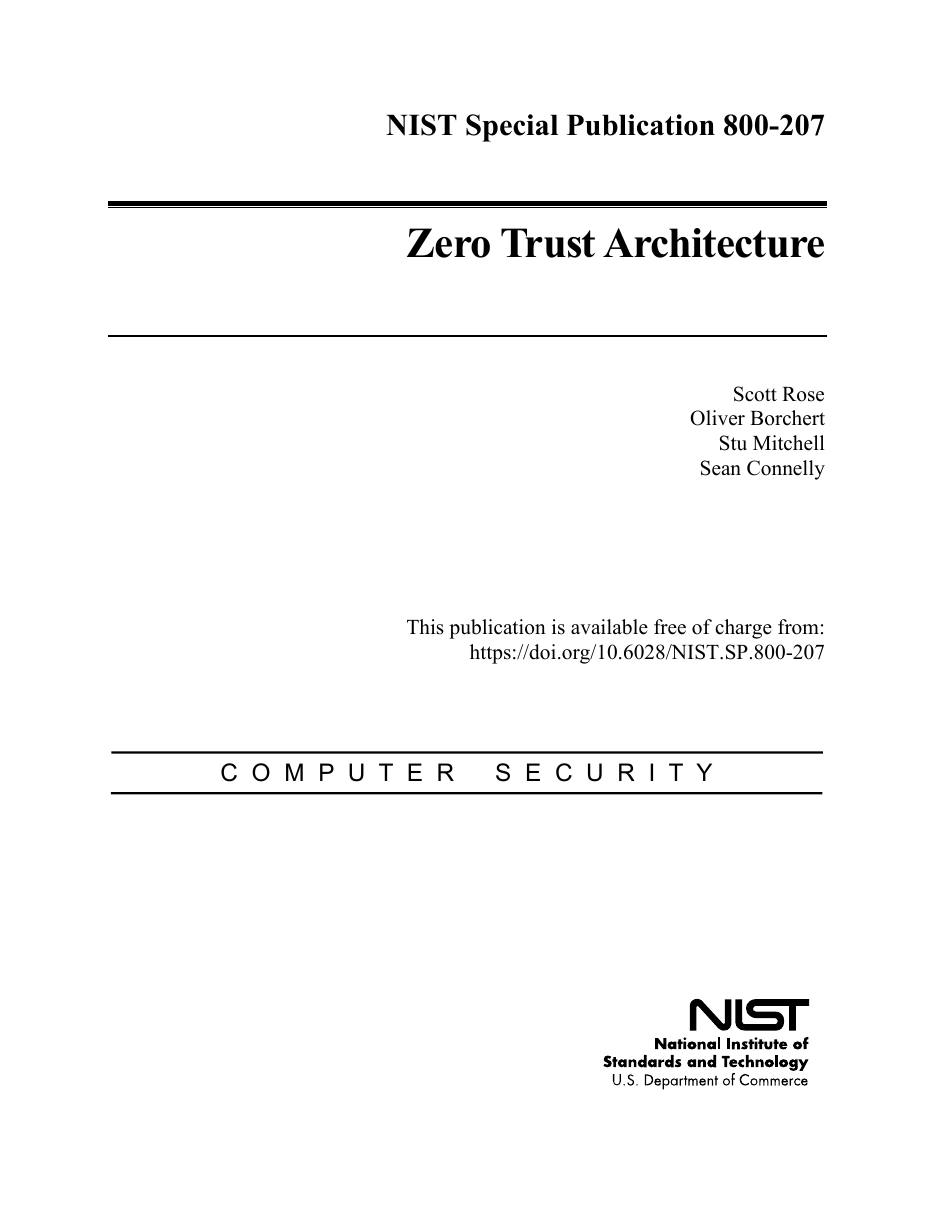
National Institute of Standards and Technology

National Institute of Standards and Technology
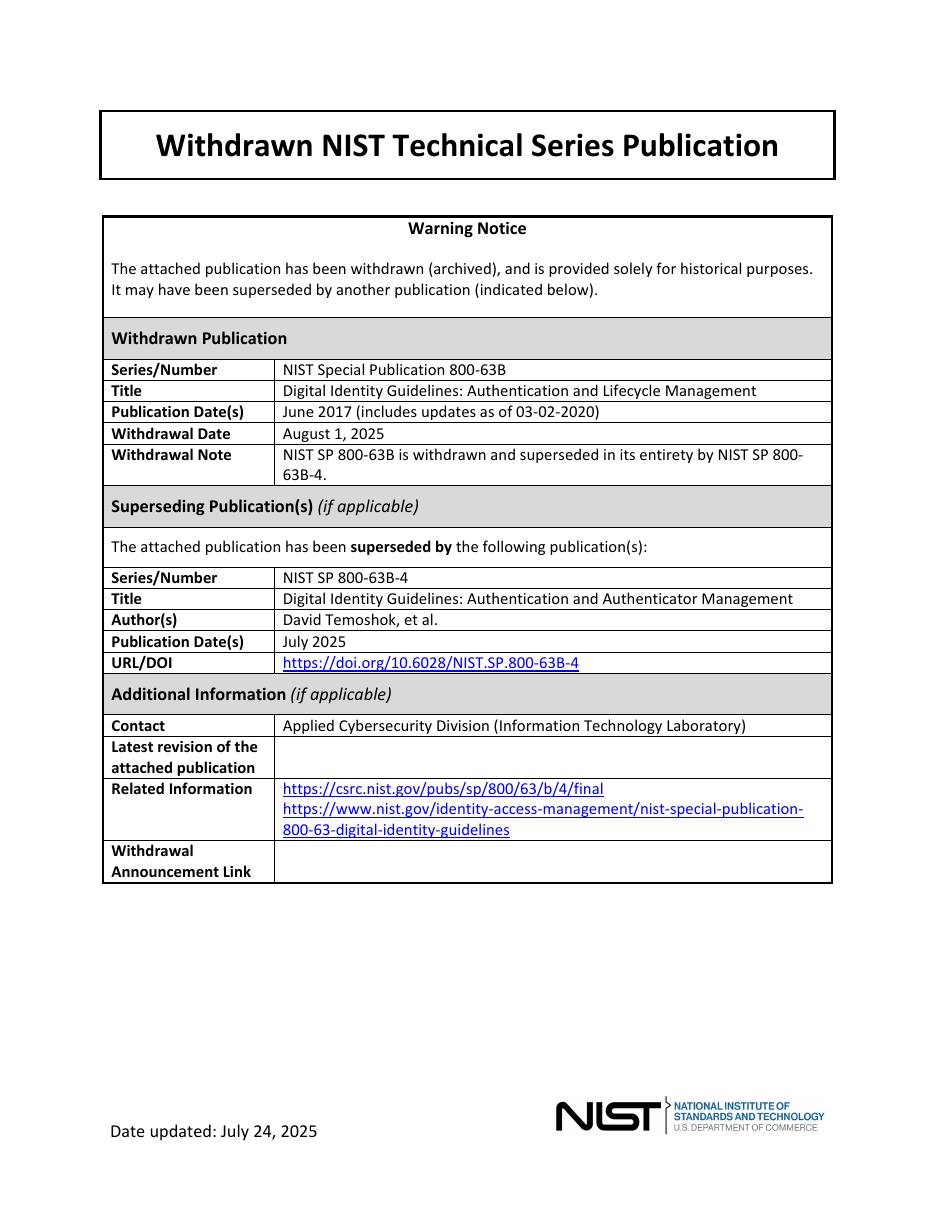
National Institute of Standards and Technology

National Institute of Standards and Technology

National Institute of Standards and Technology

National Institute of Standards and Technology