
Page 1
Cost of a Data Breach Report 2025 The AI Oversight Gap think report
IBM’s 2025 report examines data breach costs, AI security risks and governance gaps using independent research by Ponemon Institute covering 600 organizations across 17 industries and 16 countries and regions. The organizations experienced breaches between March 2024 and February 2025. Global average breach costs fell 9% to USD 4.44 million, while the US average reached USD 10.22 million. The report explores shadow AI, AI-driven attacks, ransomware, breach detection, recovery and security investments. Organizations extensively using security AI and automation had average breach costs USD 1.9 million lower than those not using these technologies. Recommendations emphasize identity protection, AI data security, integrated AI security and governance, automation and organizational resilience.
The first 5 pages, shown as text so search engines and readers can find this document.
Cost of a Data Breach Report 2025 The AI Oversight Gap think report
Cost of a Data Breach Report 202532 01 02 03 04 05 06 Table of contents 04 Executive summary 05 What’s new in the 2025 report 06 Key findings 08 Complete findings 10 Global highlights 15 Data security 17 Initial attack vectors and root causes 19 Data breach lifecycle 20 Identifying the breach 22 Recovery time 24 Regulatory fines 26 Breaches involving AI 34 AI governance 38 AI-driven attacks 39 Ransomware attacks 40 Raising prices post-breach 41 Business disruption 42 Factors that increase or decrease breach costs 46 Security AI and automation 50 Security investments 52 Recommendations to help reduce the cost of a data breach 54 Organization demographics 54 Geographic demographics 55 Industry demographics 55 Industry definitions 56 Research methodology 56 How we calculate the cost of a data breach 57 Data breach FAQs 59 About IBM and Ponemon Institute
Cost of a Data Breach Report 202554 Executive summary Welcome to IBM’s annual Cost of a Data Breach Report. With this edition, we mark 20 years of data breach research. This year, we set our sights on the most fundamental technological shift in a generation: the adoption of AI. With the 2025 report, we begin chronicling and quantifying the risks associated with AI. What we’ve found is concerning: organizations are skipping over security and governance for AI in favor of do-it-now AI adoption. Those ungoverned systems are more likely to be breached—and more costly when they are. We’re not surprised. Since 2005, this report has tracked an ever expanding technology landscape and the threats that follow it. Our research partners at Ponemon Institute have not only documented the emergence of new threats and attack surfaces, but also quantified these threats in financial terms security and business leaders can understand and act on. All told, their researchers have studied more than 6,485 breaches and interviewed over 34,652 technology, security and business leaders involved in their organization’s response to the breach. Obviously, security threats have changed through the years. Two decades ago, nearly half of all data breaches (45%) were caused by a lost or stolen computing device, such as a laptop or thumb drive, while only 10% of breaches were attributed to “hacked electronic systems.” Today, most breaches are caused by a range of malicious activities, from phishing to insider threats. Ten years ago, breaches due to cloud misconfiguration weren’t even a categorized threat. Today, the cloud and the data in it are a prime target. And it was only during the COVID-19 lockdowns in 2020 that ransomware began to surge. A year later, those attacks accounted for an average USD 4.62 million in breach costs, a figure that hit USD 5.08 million in this year’s report. However, one constant has been the work of Ponemon. This year’s research—conducted independently by Ponemon Institute and sponsored, analyzed and published by IBM—studied 600 organizations impacted by data breaches between March 2024 and February 2025. Together, we looked at organizations across 17 industries, in 16 countries and regions, and breaches that ranged from 2,960 to 113,620 compromised records. To gain on-the-ground insights, Ponemon researchers interviewed 3,470 security and C-suite business leaders with firsthand knowledge of the data breach incidents at their organizations. These leaders included CEOs, CISOs, heads of operations, controllers or heads of finance, IT practitioners, business unit leaders and general managers, and risk management and cybersecurity practitioners. The result is a benchmark report that business, technology and security leaders can use to strengthen their defenses, inform resource allocation and drive innovation, particularly around securing and governing their AI initiatives. This year’s headline: global data breach costs have declined for the first time in five years, dropping to USD 4.44 million, due to faster breach containment that was driven by AI-powered defenses. But as defenders move smarter and faster, so do attackers—16% of breaches reportedly involved attackers using AI, often used in phishing and deepfake attacks. While this escalating AI arms race has benefitted organizations by pushing global breach costs lower, the US is bucking the trend. Breach costs there have surged past USD 10 million, driven by steeper regulatory penalties and rising detection costs. We also found AI adoption is outpacing oversight. We found 97% of AI-related security breaches involved AI systems that lacked proper access controls. And most breached organizations reported they have no governance policies in place to manage AI or prevent shadow AI—the use of AI without employer approval or oversight. Both the covert use of shadow AI and the lack of governance are driving up breach costs. What’s new in the 2025 report As always, the Cost of a Data Breach Report reflects new technologies, emerging tactics and recent events. For the first time, this year’s research explores the: – State of security and governance for AI – Prevalence and risk profile of shadow AI – Type of data targeted in security incidents involving AI – Length of breach disruptions to organizations – Cost savings from using quantum security tools – Breach costs associated with AI-driven attacks – Amount of breach costs passed on to customers
Cost of a Data Breach Report 202576 Key findings The key findings described here are based on IBM analysis of research data independently compiled by Ponemon Institute. USD 4.44M The global average cost of a data breach The global average breach cost dropped to USD 4.44 million from USD 4.88 million in 2024, a 9% decrease and a return to 2023 cost levels. Faster identification and containment of breaches—much of it from organizations’ own security and security service teams, with help from AI and automation—drove this decline. The global average would have been lower were it not for the United States, where the average cost surged by 9% to USD 10.22 million, an all-time high for any region. Higher regulatory fines and higher detection and escalation costs in the United States contributed to this surge. 97% Share of organizations that reported an AI-related breach and lacked proper AI access controls Security incidents involving an organization’s AI remain limited— for now. On average, 13% of organizations reported breaches that involved their AI models or applications. However, among those that did, almost all (97%) lacked proper AI access controls. The most common of these security incidents occurred in the AI supply chain, through compromised apps, APIs or plug-ins. These incidents had a ripple effect: they led to broad data compromise (60%) and operational disruption (31%). The findings suggest AI is emerging as a high-value target. USD 4.92M Average cost of malicious insider attacks For the second year in a row, malicious insider attacks resulted in the highest average breach costs among initial threat vectors: USD 4.92 million. Third-party vendor and supply chain compromise followed closely at USD 4.91 million. Other expensive attack vectors included vulnerability exploitation and phishing. However, the most frequent type of attack vector on organizations was phishing, at 16%, which averaged USD 4.8 million. USD 670K Added breach cost for shadow AI Among the organizations studied this year, 20% said they suffered a breach due to security incidents involving shadow AI. For organizations with high levels of shadow AI, those breaches added USD 670,000 to the average breach price tag compared to those that had low levels of shadow AI or none. These incidents also resulted in more personal identifiable information (65%) and intellectual property (40%) data being compromised. And that data was most often stored across multiple environments, revealing just one unmonitored AI system can lead to widespread exposure. The swift rise of shadow AI has displaced security skills shortages as one of the top three costly breach factors tracked by this report. USD 1.9M Cost savings from extensive use of AI in security Security teams using AI and automation extensively shortened their breach times by 80 days and lowered their average breach costs by USD 1.9 million compared to organizations that didn’t use these solutions. Nearly a third of organizations said they used these tools extensively across the security lifecycle—in prevention, detection, investigation and response. However, that figure is up only slightly from the previous year, suggesting AI adoption may have stalled. It also shows the majority are still not using AI and automation and, therefore, aren’t seeing the cost benefits. 63% Share of organizations that refused to pay ransomware attackers More ransomware victims refused to pay a ransom in 2025 (63%) than 2024 (59%). However, the average cost of an extortion or ransomware incident remains high, particularly when disclosed by an attacker (USD 5.08 million). At the same time, fewer ransomware victims reported involving law enforcement—40% of organizations this year versus 53% last year. 49% Share of organizations investing in security post breach There was a significant reduction in the number of organizations that plan to invest in security following a breach, 49% this year compared to 63% last year. Less than half of those who plan to invest in a security plan to focus on AI-driven security solutions or services, such as threat detection and response, incident response (IR) planning and testing, and data security or protection tools. 63% Share of organizations that lack AI governance policies A majority of breached organizations (63%) either don’t have an AI governance policy or are still developing one. Even when they have a policy, less than half have an approval process for AI deployments, and 61% lack AI governance technologies. Among organizations that have governance polices in place, only a minority (34%) perform regular audits for unsanctioned AI. It shows AI remains largely unchecked as adoption outpaces both security and governance. 1 in 6 Number of breaches involving AI-driven attacks Attackers can use generative AI (gen AI) to both perfect and scale their phishing campaigns and other social engineering attacks. IBM previously found gen AI reduced the time needed to craft a convincing phishing email from 16 hours down to only five minutes. This year’s report shows the impact: on average, 16% of data breaches involved attackers using AI, most often for AI-generated phishing (37%) and deepfake impersonation attacks (35%).
98 Complete findings The complete findings from this year’s survey address 16 themes, presented in the following order: – Global highlights – Data security – Initial attack vectors and root causes – Data breach lifecycle – Identifying the breach – Regulatory fines – Recovery time – Breaches involving AI – AI governance – AI-driven attacks – Ransomware attacks – Raising prices post-breach – Business disruption – Factors that increase or decrease breach costs – Security AI and automation – Security investments Globally, the average cost of a data breach fell while it hit a record high in the US. Measured in USD 4.44MGlobal average 10.22MUnited States average
Doxxly editorial guide
This guide helps you understand the scope of Cost of a Data Breach Report 2025: The AI Oversight Gap before or alongside reading the original document. It is based on the catalogue record, credited creator, source, classification and topics shown on this page. It does not replace the original work and does not invent claims about passages that Doxxly cannot verify.
Cost of a Data Breach Report 2025: The AI Oversight Gap is a 31-page documentcredited to Lior C. Vance. IBM’s 2025 report examines data breach costs, AI security risks and governance gaps using independent research by Ponemon Institute covering 600 organizations across 17 industries and 16 countries and regions. The organizations experienced breaches between March 2024 and February 2025. Global average breach costs fell 9% to USD 4.44 million, while the US average reached USD 10.22 million. The report explores shadow AI, AI-driven attacks, ransomware, breach detection, recovery and security investments. Organizations extensively using security AI and automation had average breach costs USD 1.9 million lower than those not using these technologies. Recommendations emphasize identity protection, AI data security, integrated AI security and governance, automation and organizational resilience. It appears in the Technology & Security collection, which groups it with other material that readers may use for comparison and further study.
The item can be approached in several ways. A reader looking for a quick orientation can begin with the free five-page preview, inspect the page structure and use the metadata to judge relevance. Someone undertaking deeper research can work through the complete file, search its indexed text, record useful page references and compare its treatment of Data breaches, Cybersecurity, AI security, AI governance, Shadow AI, Security automation, Ransomware, Incident response, Benchmark research with the related resources linked below.
Rather than reducing the work to a single claim, this page treats it as a source that should be read in context. The title, creator, publication source, licence and format all help explain what kind of evidence it may offer. Readers should distinguish the original author's statements from Doxxly's catalogue description, and should cite the original edition when using the material in academic, professional or published work.
The catalogue connects this document with Data breaches, Cybersecurity, AI security, AI governance, Shadow AI, Security automation, Ransomware, Incident response, Benchmark research. These terms offer practical entry points rather than a substitute for close reading. Start by identifying the definitions, examples, arguments, tables or visual explanations attached to each topic. Then note where the creator draws connections, makes distinctions or moves from background material to a conclusion, recommendation, calculation or narrative development.
A useful reading method is to separate description from interpretation. First record what the item actually presents: names, headings, figures, formulas, quotations or stated propositions. Next consider why those details matter within the whole work. Finally compare them with another source from the same subject area. This process helps turn a long digital file into evidence that can be evaluated rather than merely skimmed.
The following is an editorial content guide based on the verified catalogue topics. It is not represented as the original author's formal table of contents. Use it to organise notes while moving through the 31 pages in the player.
Use this section of the reading guide to identify how Data breaches appears in Cost of a Data Breach Report 2025: The AI Oversight Gap, note important terms, and connect the subject to the wider purpose of the work.
Use this section of the reading guide to identify how Cybersecurity appears in Cost of a Data Breach Report 2025: The AI Oversight Gap, note important terms, and connect the subject to the wider purpose of the work.
Use this section of the reading guide to identify how AI security appears in Cost of a Data Breach Report 2025: The AI Oversight Gap, note important terms, and connect the subject to the wider purpose of the work.
Use this section of the reading guide to identify how AI governance appears in Cost of a Data Breach Report 2025: The AI Oversight Gap, note important terms, and connect the subject to the wider purpose of the work.
Use this section of the reading guide to identify how Shadow AI appears in Cost of a Data Breach Report 2025: The AI Oversight Gap, note important terms, and connect the subject to the wider purpose of the work.
Use this section of the reading guide to identify how Security automation appears in Cost of a Data Breach Report 2025: The AI Oversight Gap, note important terms, and connect the subject to the wider purpose of the work.
Use this section of the reading guide to identify how Ransomware appears in Cost of a Data Breach Report 2025: The AI Oversight Gap, note important terms, and connect the subject to the wider purpose of the work.
Use this section of the reading guide to identify how Incident response appears in Cost of a Data Breach Report 2025: The AI Oversight Gap, note important terms, and connect the subject to the wider purpose of the work.
When a heading in the original differs from this guide, follow the original heading in your citation. Page numbers can also vary between editions. Doxxly's direct page field is useful for navigation, but formal references should include the title, creator, source and edition details available in the file itself.
Doxxly credits Lior C. Vance as the author or creator of Cost of a Data Breach Report 2025: The AI Oversight Gap. This page does not add an unverified biography, job title or institutional affiliation. The attribution is preserved so readers can distinguish the creator from the hosting library and follow the original record when an external author link is available.
Author context matters because a work reflects a particular purpose, audience and point of view. Before relying on the material, consider what the creator set out to explain, when the source was produced and whether later research or revised guidance should also be consulted. For literature and philosophy, compare translations and editions; for technical material, check whether a newer version has superseded the one shown here.
The recorded source for this item is bakerdonelson.com. Doxxly provides access and discovery tools but does not claim to be the original publisher unless explicitly stated. Source links, creator attribution and the recorded Publicly available file collected for editorial review licence are displayed to help readers assess provenance and permitted use.
Provenance is especially important for reports, standards, presentations and working spreadsheets. Check the original source for amendments, supporting files and current policy. A trustworthy research workflow keeps the source URL with any notes or downloaded copy, verifies important figures against the original, and avoids treating an archived document as automatically current.
Visit bakerdonelson.comBegin with the title and opening pages, then use the guide above to decide whether to read sequentially or move to a particular topic. The Doxxly player provides previous and next navigation, a direct page field, zoom steps, fit-to-width and fit-to-page modes, rotation and fullscreen. These controls are useful when a page contains small type, a wide table, an image, a scanned layout or a dense sequence of notes.
The first five pages are open to every visitor. A plan unlocks the complete item and full-document search. Search is best used for distinctive names, technical terms or short phrases; broad words can produce too many possible contexts. When you find a useful passage, read the surrounding pages so that a sentence, chart or formula is not separated from its explanation.
If downloading is enabled, members can obtain the original PDF file. Keep the original format when formulas, slide sequencing, pagination or layout carries meaning. Respect the Publicly available file collected for editorial review terms displayed on this page, and use the rights-report link if you believe the attribution or availability needs review.
As you read Cost of a Data Breach Report 2025: The AI Oversight Gap, ask which audience the creator addresses, what problem or idea organises the work, what evidence is presented, and which assumptions remain unstated. Note whether important terms are defined consistently and whether examples represent a broader pattern or a narrow case. For quantitative material, record units, time periods, formulas and data sources. For interpretive material, separate the creator's language from your own summary.
A second set of questions concerns relevance today. Which parts remain durable, which depend on their historical or institutional setting, and what would need confirmation from a newer source? Following the tags and the Technology & Security collection can reveal useful comparisons. Agreement between sources can strengthen confidence, while disagreement can point to changing definitions, methods, evidence or priorities.
Finally, decide what you need from the item: background knowledge, a quotation, a worked example, a model, a visual explanation or a starting bibliography. That purpose should guide the depth of reading and the notes you keep. Doxxly helps locate and navigate the source; careful interpretation remains the reader's responsibility.
Practical answers about reading, downloading and understanding this document on Doxxly.
National Institute of Standards and Technology
National Institute of Standards and Technology
National Institute of Standards and Technology
National Institute of Standards and Technology
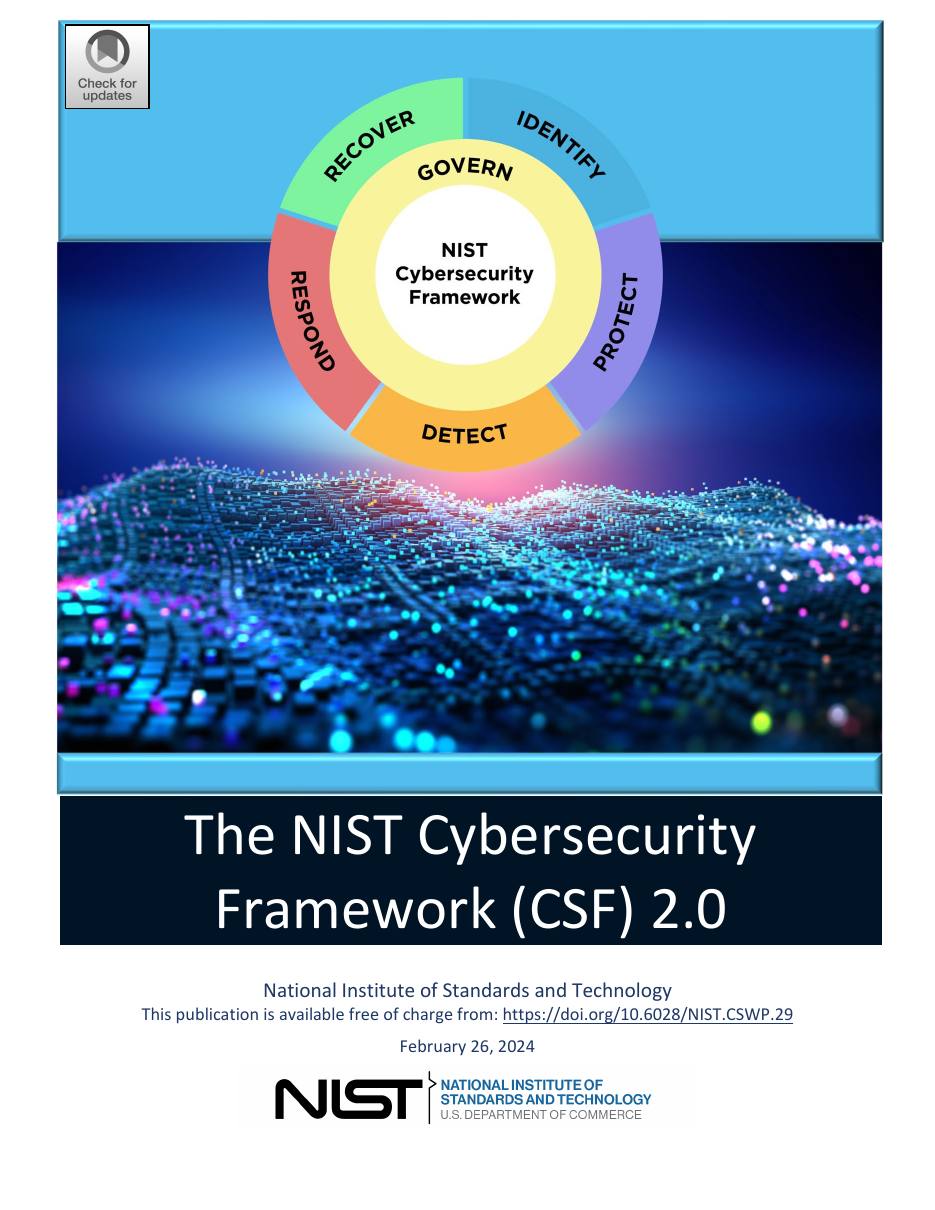
National Institute of Standards and Technology
National Institute of Standards and Technology