
Page 1
Federal Data Strategy Data Ethics Framework
A guidance framework developed by the General Services Administration with interagency input to help federal leaders and data users make ethical decisions throughout the data lifecycle. It presents seven tenets addressing legal and professional standards, public benefit, privacy and confidentiality, honesty and integrity, accountability, transparency, and developments in data management and data science. The framework includes recommendations for leaders and practitioners, relevant legal authorities, additional resources, and use cases on artificial intelligence and bias and on data dissemination and its impacts. It provides guidance rather than independent requirements or mandates.
The first 5 pages, shown as text so search engines and readers can find this document.
Federal Data Strategy Data Ethics Framework
Federal Data Strategy Data Ethics Framework STRATEGY.DATA.GOV Page 2 RESOURCES.DATA.GOV Special Thanks to Our Contributors Decisions made with data touch every aspect of American life. The Federal Government uses data to solve problems, develop and deliver services to citizens, defend and secure the nation, and support economic growth. Data’s benefits and risks are amplified by the expanding capabilities of digital networks, technology systems, algorithms, and computational methods that enable data to be easily collected, combined, manipulated, and shared. The Federal Data Strategy, delivered in December 2019, recognized the importance of ethics in its founding principles. When the Federal Data Strategy team created the 2020 Action Plan,1 they tasked the General Services Administration (GSA) with developing a Data Ethics Framework (Framework) in Action 14 to help federal employees, managers, and leaders make ethical decisions as they acquire, manage, and use data. To achieve the goal of developing a useful Data Ethics Framework for the Federal Government, GSA sought input from a diverse set of stakeholders to maximize the Framework’s value and utility across the federal enterprise. To lead the Framework’s development, GSA formed an interagency team comprised of 14 government leaders from across government with expertise in statistics, public policy, evidence-based decision making, privacy, and analytics. In addition, GSA received input on the Framework from the Chief Data Officer (CDO) Council, Interagency Council on Statistical Policy (ICSP), and the Federal Privacy Council (FPC). The resulting Framework will help guide the ethical acquisition, management, and use of data for years to come.
Federal Data Strategy Data Ethics Framework STRATEGY.DATA.GOV Page 3 RESOURCES.DATA.GOV Data Ethics Framework Development Team • Trey Bradley, Strategic Data Initiatives Program Manager, Office of Shared Solutions & Performance Improvement, U.S. General Services Administration (Development Lead) • Ken Ambrose, Senior Advisor for the CDO Council, Office of Government-wide Policy, U.S. General Services Administration • Maya Bernstein, Senior Advisor for Privacy Policy, Office of the Secretary for Planning & Evaluation, U.S. Department of Health & Human Services • Ivan DeLoatch, Executive Director, Federal Geographic Data Committee, U.S. Geological Survey, U.S. Department of the Interior • Dave Dreisigmeyer, Interim Deputy Chief Data Officer, Office of the Under Secretary for Economic Affairs, U.S. Department of Commerce • Jeffrey Gonzales, Research Mathematical Statistician, Economic Research Service, U.S. Department of Agriculture • Chris Grubb, Chief Data Scientist, Center for Analytics, U.S. Department of State • Lisa Haralampus, Director of Records Management Policy and Outreach, Office of the Chief Records Officer, U.S. National Archives and Records Administration • Michael Hawes, Senior Advisor for Data Access and Privacy, U.S. Census Bureau, U.S. Department of Commerce • Barry Johnson, Acting Chief, Research and Analytics Office, Internal Revenue Service, U.S. Department of the Treasury • Brandon Kopp, Research Psychologist, Bureau of Labor Statistics, U.S. Department of Labor • John Krebs, Chief Privacy Officer, Federal Trade Commission • Justin Marsico, Chief Data Officer, Deputy Assistant Commissioner, Bureau of the Fiscal Service, U.S. Department of the Treasury • Daniel Morgan, Chief Data Officer, U.S. Department of Transportation • Katerine Osatuke, Research Director, Veterans Health Administration National Center for Organization Development, U.S. Department of Veterans Affairs • Eileen Vidrine, Chief Data Officer, U.S. Air Force, U.S. Department of Defense With special thanks for the consistent support and meaningful contributions of the CDO Council, ICSP, and FPC.
Federal Data Strategy Data Ethics Framework STRATEGY.DATA.GOV Page 4 RESOURCES.DATA.GOV Data Ethics Tenets Federal Data Ethics Tenets help federal data users make decisions ethically and promote accountability throughout the data lifecycle—as data are acquired, processed, disseminated, used, stored and disposed. Regardless of data type or use, those working with data in the public sector should have a foundational understanding of the Data Ethics Tenets. Federal leaders should also foster a data ethics-driven culture and lead by example. The Data Ethics Tenets are: 1 - Uphold applicable statutes, regulations, professional practices, and ethical standards. Existing laws reflect and reinforce ethics. Therefore, data leaders and data users should adhere to all applicable legal authorities. Legal authorities often address historic situations and issues and may not keep pace with the evolving world of data and technology. Organizational leaders are encouraged to maintain up-to-date, comprehensive ethical standards regarding data use and staff are responsible for learning and applying agency guidance appropriately. 2 - Respect the public, individuals, and communities. Data activities have the overarching goal of benefiting the public good. Responsible use of data begins with careful consideration of its potential impacts. Data initiatives should include considera tions for unique community and local contexts and have an identified and clear benefit to society. 3 - Respect privacy and confidentiality. Privacy and confidentiality should always be protected in a manner that respects the dignity, rights, and freedom of data subjects. In this context, privacy is the state of being free from unwarranted intrusion into the private life of individuals, and confidentiality is the state of one’s information being free from inappropriate access and misuse. An essential objective of privacy and confidentiality protection is to minimize potential negative consequences through measures such as comprehensive risk assessments, disclosure avoidance, and upholding data governance standards. Data activities involving individual privacy should align with the Fair Information Practice Principles (FIPPs). 4 - Act with honesty, integrity, and humility. All federal leaders and data users are expected to exhibit honesty and integrity in their work with data, regardless of job title, role, or data responsibilities. Federal leaders and data users should not perform or condone unethical data behaviors. When sharing data and findings, personnel should report information accurately and present any data limitations, known biases, and methods of analysis that apply. It should also be recognized that no dataset can fully represent all facets of a person, community, or issue. Federal leaders and data users are expected to have humility when presenting data, be open to feedback, and when possible invite discussion with the public. In addition, federal data users should accurately represent their abilities when working with data. 5 - Hold oneself and others accountable. Accountability requires that anyone acquiring, managing, or using data be aware of stakeholders and be responsible to them, as appropriate. Remaining accountable includes the responsible handling of classified and controlled information, upholding data use agreements made with data providers, minimizing data collection, informing individuals and organizations of the potential uses of their data, and allowing for public access, amendment, and contestability to data and findings, where appropriate. 6 - Promote transparency. Individuals, organizations, and communities benefit when the ethical decision-making process is as transparent as possible to stakeholders. Transparency depends on clear communication of all aspects of data activities and appropriate engagement with data stakeholders. Promoting transparency requires engaging stakeholders through easily accessible feedback channels and providing timely updates on the progress and outcomes of data use. 7 - Stay informed of developments in the fields of data management and data science. Advanced technologies provide great benefit to the public sector, but should be deployed with a commitment to accountability and risk mitigation. While traditional data use and analysis can introduce bias, emerging systems, technologies, and techniques require additional awareness and oversight because they can increase opportunities for bias. It is critical to remain informed of developments in the fields of data management and data science, especially as advanced methods impact future data collection, management, and use. In addition, new data innovations (e.g., systems, solutions, computational methods) emerge every day, increasing the importance for federa l leaders and employees working with data to keep abreast of market innovations and learn how to ethically use new methods. Note: The Framework is a “living” resource and to be updated by the CDO Council and ICSP every 24 months.
Federal Data Strategy Data Ethics Framework STRATEGY.DATA.GOV Page 5 RESOURCES.DATA.GOV Content Overview of Data Ethics Framework......................................................................................................... 6 Background....................................................................................................................................... 6 Introduction...................................................................................................................................... 6 Benefits of Data Ethics........................................................................................................................ 7 About the Data Ethics Framework............................................................................................................ 8 Purpose............................................................................................................................................ 8 Audience .......................................................................................................................................... 8 Data Ethics Defined ............................................................................................................................... 9 Application of Data Ethics ................................................................................................................... 9 Data Ethics Tenets ............................................................................................................................... 10 1. Uphold Applicable Statutes, Regulations, Professional Practices, and Ethical Standards....................... 11 2. Respect the Public, Individuals, and Communities .......................................................................... 12 3. Respect Privacy and Confidentiality ............................................................................................. 13 4. Act with Honesty, Integrity, and Humility...................................................................................... 15 5. Hold Oneself and Others Accountable .......................................................................................... 17 6. Promote Transparency............................................................................................................... 19 7. Stay Informed of Developments in the Fields of Data Management and Data Science ......................... 20 Data Ethics Tenets in Action.................................................................................................................. 22 Use Cases ....................................................................................................................................... 22 1. Use Case: Artificial Intelligence & Bias ...................................................................................... 22 2. Use Case: Dissemination & Impacts .......................................................................................... 25 End Notes .......................................................................................................................................... 28
Doxxly editorial guide
This guide helps you understand the scope of Federal Data Strategy Data Ethics Framework before or alongside reading the original document. It is based on the catalogue record, credited creator, source, classification and topics shown on this page. It does not replace the original work and does not invent claims about passages that Doxxly cannot verify.
Federal Data Strategy Data Ethics Framework is a 28-page documentcredited to Hana K. Vance. A guidance framework developed by the General Services Administration with interagency input to help federal leaders and data users make ethical decisions throughout the data lifecycle. It presents seven tenets addressing legal and professional standards, public benefit, privacy and confidentiality, honesty and integrity, accountability, transparency, and developments in data management and data science. The framework includes recommendations for leaders and practitioners, relevant legal authorities, additional resources, and use cases on artificial intelligence and bias and on data dissemination and its impacts. It provides guidance rather than independent requirements or mandates. It appears in the Technology & Security collection, which groups it with other material that readers may use for comparison and further study.
The item can be approached in several ways. A reader looking for a quick orientation can begin with the free five-page preview, inspect the page structure and use the metadata to judge relevance. Someone undertaking deeper research can work through the complete file, search its indexed text, record useful page references and compare its treatment of Data ethics, Federal Data Strategy, Federal government, Data governance, Privacy and confidentiality, Accountability, Transparency, Artificial intelligence, Bias mitigation, Data lifecycle with the related resources linked below.
Rather than reducing the work to a single claim, this page treats it as a source that should be read in context. The title, creator, publication source, licence and format all help explain what kind of evidence it may offer. Readers should distinguish the original author's statements from Doxxly's catalogue description, and should cite the original edition when using the material in academic, professional or published work.
The catalogue connects this document with Data ethics, Federal Data Strategy, Federal government, Data governance, Privacy and confidentiality, Accountability, Transparency, Artificial intelligence, Bias mitigation, Data lifecycle. These terms offer practical entry points rather than a substitute for close reading. Start by identifying the definitions, examples, arguments, tables or visual explanations attached to each topic. Then note where the creator draws connections, makes distinctions or moves from background material to a conclusion, recommendation, calculation or narrative development.
A useful reading method is to separate description from interpretation. First record what the item actually presents: names, headings, figures, formulas, quotations or stated propositions. Next consider why those details matter within the whole work. Finally compare them with another source from the same subject area. This process helps turn a long digital file into evidence that can be evaluated rather than merely skimmed.
The following is an editorial content guide based on the verified catalogue topics. It is not represented as the original author's formal table of contents. Use it to organise notes while moving through the 28 pages in the player.
Use this section of the reading guide to identify how Data ethics appears in Federal Data Strategy Data Ethics Framework, note important terms, and connect the subject to the wider purpose of the work.
Use this section of the reading guide to identify how Federal Data Strategy appears in Federal Data Strategy Data Ethics Framework, note important terms, and connect the subject to the wider purpose of the work.
Use this section of the reading guide to identify how Federal government appears in Federal Data Strategy Data Ethics Framework, note important terms, and connect the subject to the wider purpose of the work.
Use this section of the reading guide to identify how Data governance appears in Federal Data Strategy Data Ethics Framework, note important terms, and connect the subject to the wider purpose of the work.
Use this section of the reading guide to identify how Privacy and confidentiality appears in Federal Data Strategy Data Ethics Framework, note important terms, and connect the subject to the wider purpose of the work.
Use this section of the reading guide to identify how Accountability appears in Federal Data Strategy Data Ethics Framework, note important terms, and connect the subject to the wider purpose of the work.
Use this section of the reading guide to identify how Transparency appears in Federal Data Strategy Data Ethics Framework, note important terms, and connect the subject to the wider purpose of the work.
Use this section of the reading guide to identify how Artificial intelligence appears in Federal Data Strategy Data Ethics Framework, note important terms, and connect the subject to the wider purpose of the work.
When a heading in the original differs from this guide, follow the original heading in your citation. Page numbers can also vary between editions. Doxxly's direct page field is useful for navigation, but formal references should include the title, creator, source and edition details available in the file itself.
Doxxly credits Hana K. Vance as the author or creator of Federal Data Strategy Data Ethics Framework. This page does not add an unverified biography, job title or institutional affiliation. The attribution is preserved so readers can distinguish the creator from the hosting library and follow the original record when an external author link is available.
Author context matters because a work reflects a particular purpose, audience and point of view. Before relying on the material, consider what the creator set out to explain, when the source was produced and whether later research or revised guidance should also be consulted. For literature and philosophy, compare translations and editions; for technical material, check whether a newer version has superseded the one shown here.
The recorded source for this item is resources.data.gov. Doxxly provides access and discovery tools but does not claim to be the original publisher unless explicitly stated. Source links, creator attribution and the recorded Publicly available file collected for editorial review licence are displayed to help readers assess provenance and permitted use.
Provenance is especially important for reports, standards, presentations and working spreadsheets. Check the original source for amendments, supporting files and current policy. A trustworthy research workflow keeps the source URL with any notes or downloaded copy, verifies important figures against the original, and avoids treating an archived document as automatically current.
Visit resources.data.govBegin with the title and opening pages, then use the guide above to decide whether to read sequentially or move to a particular topic. The Doxxly player provides previous and next navigation, a direct page field, zoom steps, fit-to-width and fit-to-page modes, rotation and fullscreen. These controls are useful when a page contains small type, a wide table, an image, a scanned layout or a dense sequence of notes.
The first five pages are open to every visitor. A plan unlocks the complete item and full-document search. Search is best used for distinctive names, technical terms or short phrases; broad words can produce too many possible contexts. When you find a useful passage, read the surrounding pages so that a sentence, chart or formula is not separated from its explanation.
If downloading is enabled, members can obtain the original PDF file. Keep the original format when formulas, slide sequencing, pagination or layout carries meaning. Respect the Publicly available file collected for editorial review terms displayed on this page, and use the rights-report link if you believe the attribution or availability needs review.
As you read Federal Data Strategy Data Ethics Framework, ask which audience the creator addresses, what problem or idea organises the work, what evidence is presented, and which assumptions remain unstated. Note whether important terms are defined consistently and whether examples represent a broader pattern or a narrow case. For quantitative material, record units, time periods, formulas and data sources. For interpretive material, separate the creator's language from your own summary.
A second set of questions concerns relevance today. Which parts remain durable, which depend on their historical or institutional setting, and what would need confirmation from a newer source? Following the tags and the Technology & Security collection can reveal useful comparisons. Agreement between sources can strengthen confidence, while disagreement can point to changing definitions, methods, evidence or priorities.
Finally, decide what you need from the item: background knowledge, a quotation, a worked example, a model, a visual explanation or a starting bibliography. That purpose should guide the depth of reading and the notes you keep. Doxxly helps locate and navigate the source; careful interpretation remains the reader's responsibility.
Practical answers about reading, downloading and understanding this document on Doxxly.
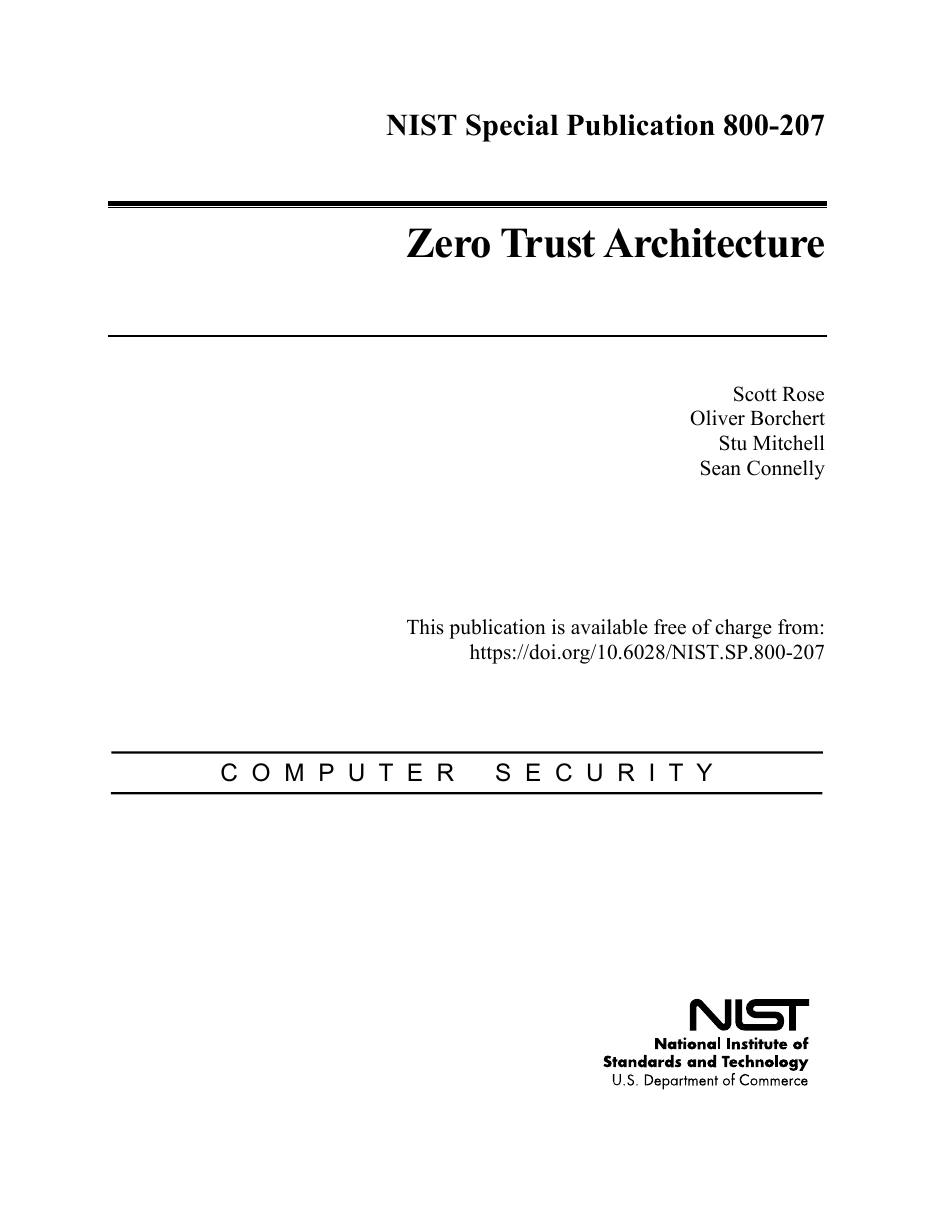
National Institute of Standards and Technology
National Institute of Standards and Technology
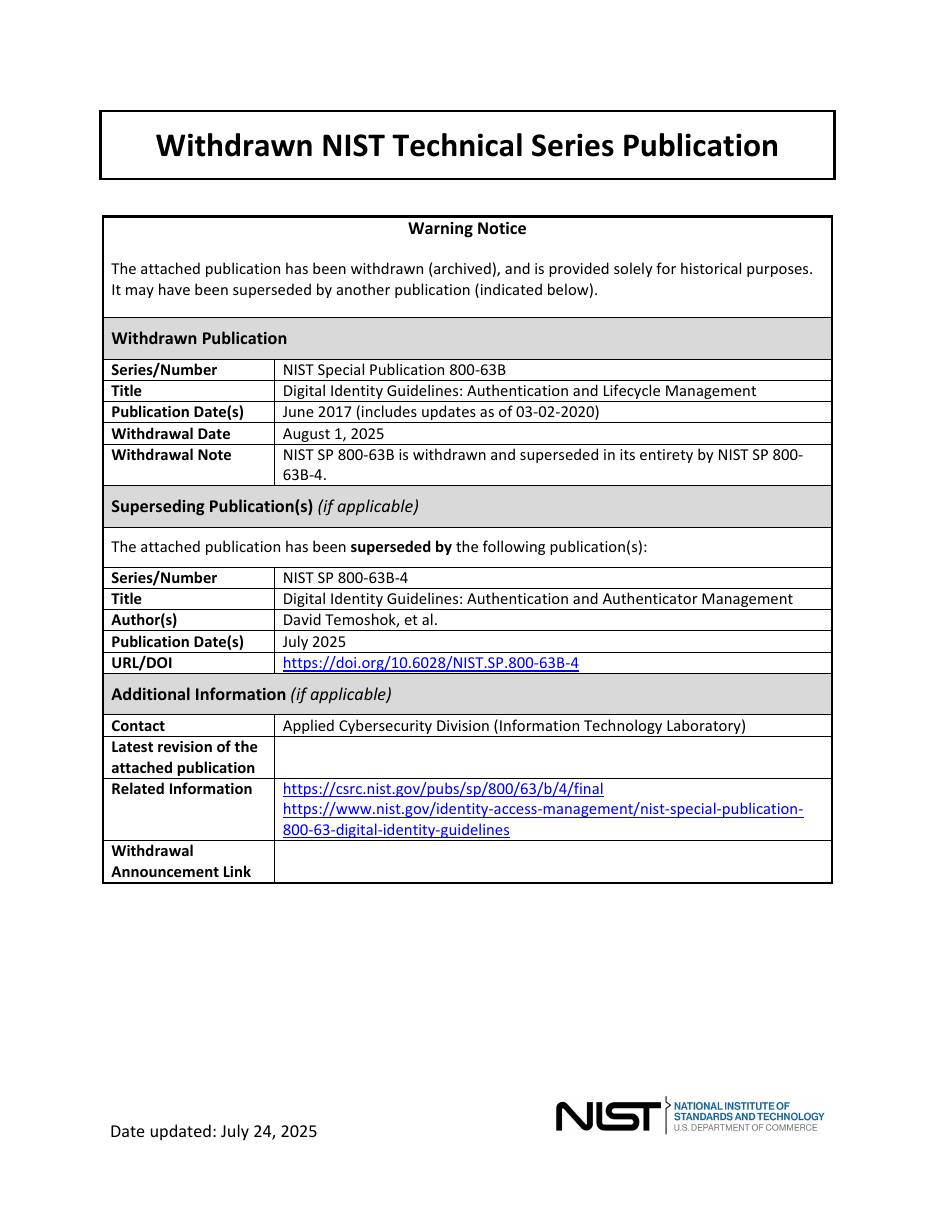
National Institute of Standards and Technology
National Institute of Standards and Technology
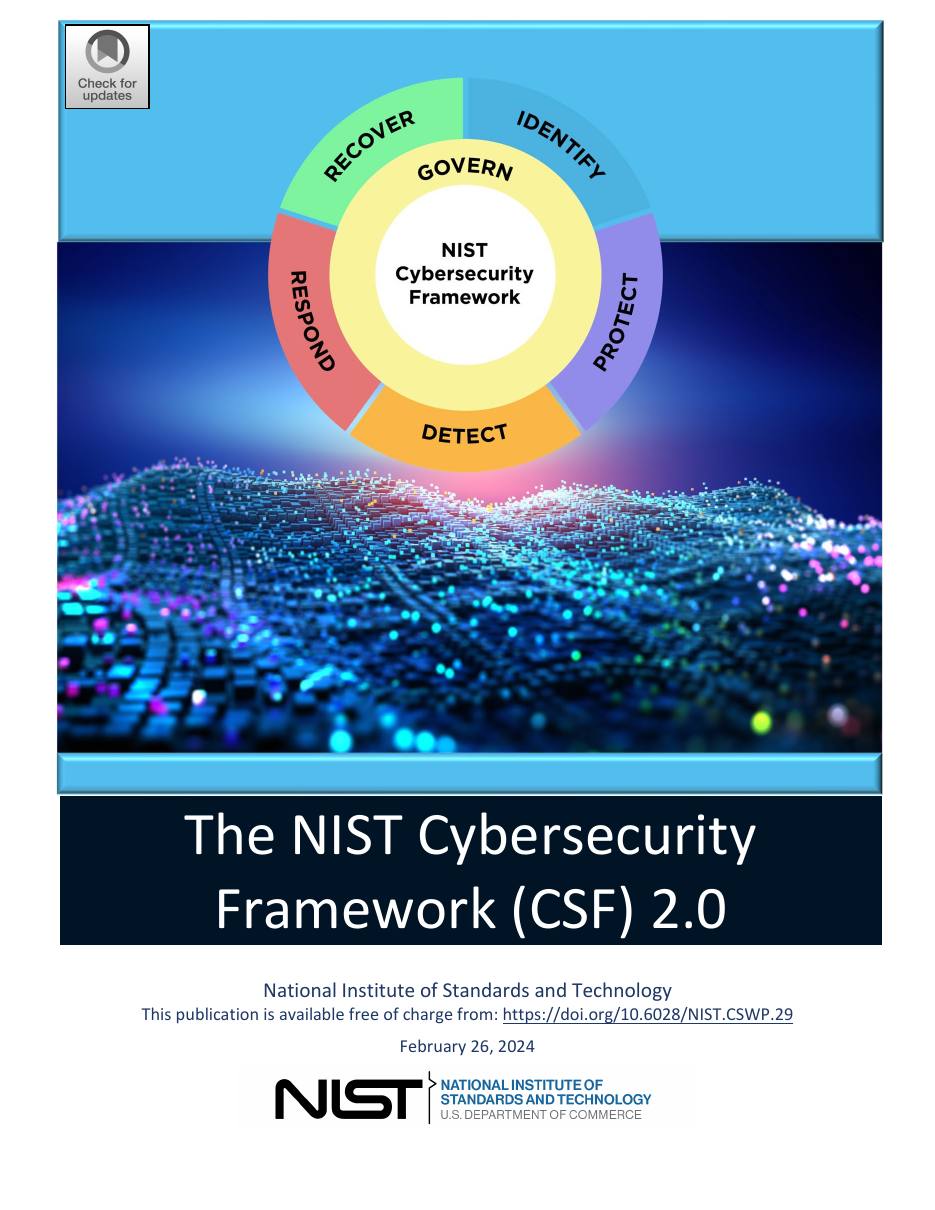
National Institute of Standards and Technology
National Institute of Standards and Technology