
Page 1
NIST PUBLICATIONS ANSI X3.159-1989 ADOPTED FOR USE BY THE FEDERAL GOVERNMENT Wirt?PUB 160 SEE NOTICE ON INSIDE for Information Systems - Programming Language C American National Standards Institute 1430 Broadway New York , New York 10018
Approved December 14, 1989, ANSI X3.159-1989 specifies the syntax, constraints, and semantics of the C programming language, its translation and execution environments, and its execution library. Developed by Technical Committee X3J11, it aims to promote portability, reliability, maintainability, and efficient execution of C programs. The document includes appendixes covering language syntax, sequence points, library facilities, implementation limits, warnings, and portability issues. It is intended for knowledgeable programmers and implementors, not as a tutorial. A notice states that the standard was adopted for Federal Government use, with details in FIPS Publication 160.
The first 5 pages, shown as text so search engines and readers can find this document.
NIST PUBLICATIONS ANSI X3.159-1989 ADOPTED FOR USE BY THE FEDERAL GOVERNMENT Wirt?PUB 160 SEE NOTICE ON INSIDE for Information Systems - Programming Language C American National Standards Institute 1430 Broadway New York , New York 10018
This standard has been adopted for Federal Government use. Details concerning its use within the Federal Government are contained in Federal Information Process¬ ing Standards Publication 160, C. For a complete list of the publications available in the Federal Informa¬ tion Processing Standards Series, write to the Standards Processing Coordinator (ADP), National Institute of Standards and Technology, Gaithersburg, MD 20899.
American National Standard for Information Systems - Programming Language C Secretariat Computer and Business Equipment Manufacturers Association Approved December 14, 1989 American National Standards Institute, Inc Abstract This standard specifies the form and establishes the interpretation of programs expressed in the program¬ ming language C. Its purpose is to promote portability, reliability, maintainability, and efficient execution of C language programs on a variety of computing systems. Sections are included that detail the C language itself and the contents of the C-language execution library. Appendixes summarize aspects of both of them, and enumerate factors that influence the portabil¬ ity of C programs. Although this standard is intended to guide knowledgeable C-language programmers as well as imple¬ mentators of C-language translation systems, the document itself is not designed to serve as a tutorial.
American National Standard Approval of an American National Standard requires verification by ANSI that the requirements for due process, consensus, and other criteria for approval have been met by the standards developer. Consensus is established when, in the judgment of the ANSI Board of Standards Review, substantial agreement has been reached by directly and materially affected interests. Substantial agreement means much more than a simple majority, but not necessarily unanimity. Consensus requires that all views and objections be considered, and that a concerted effort be made toward their resolution. The use of American National Standards is completely voluntary; their existence does not in any respect preclude anyone, whether he has approved the standards or not, from manufacturing, marketing, purchasing, or using products, processes, or procedures not conforming to the standards. The American National Standards Institute does not develop standards and will in no circumstances give an interpretation of any American National Standard. Moreover, no person shall have the right or authority to issue an interpretation of an American National Standard in the name of the American National Standards Institute. Requests for interpretations should be addressed to the secretariat or sponsor whose name appears on the title page of this standard. CAUTION NOTICE: This American National Standard may be revised or withdrawn at any time. The procedures of the American National Standards Institute require that action be taken periodically to reaffirm, revise, or withdraw this standard. Purchasers of American National Standards may receive current information on all standards by calling or writing the American National Standards Institute. Published by American National Standards Institute 1430 Broadway, New York, New York 10018 Copyright © 1989 by American National Standards Institute All rights reserved. No part of this publication may be reproduced in any form, in an electronic retrieval system or otherwise, without prior written permission of the publisher. Printed in the United States of America BB1M491/50
I P^q fC WO rd ^’S ^orewori^ 's not Part American National Standard X3.159-1989.) This standard specifies the syntax and semantics of programs written in the C programming language. It specifies the C program's interactions with the execution environment via input and output data. It also specifies restrictions and limits imposed upon conforming implementations of C language translators. The standard was developed by the X3J1I Technical Committee on the C Programming Language under project 381-D by American National Standards Committee on Computers and Information Processing (X3). SPARC document number 83-079 describes the purpose of this project to “provide an unambiguous and machine-independent definition of the language C.” The need for a single clearly defined standard had arisen in the C community due to a rapidly expanding use of the C programming language and the variety of differing translator implementations that had been and were being developed. The existence of similar but incompatible implementations was a serious problem for program developers who wished to develop code that would compile and execute as expected in several different environments. Part of this problem could be traced to the fact that implementors did not have an adequate definition of the C language upon which to base their implementations. The de facto C programming language standard. The C Programming Language by Brian W. Kernighan and Dennis M. Ritchie, is an excellent book; however, it is not precise or complete enough to specify the C language fully. In addition, the language has grown over years of use to incorporate new ideas in programming and to address some of the weaknesses of the original language. American National Standard Programming Language C addresses the problems of both the program developer and the translator implementor by specifying the C language precisely. The work of X3J11 began in the summer of 1983, based on the several documents that were made available to the Committee (see 1.5, Base Documents). The Committee divided the effort into three pieces: the environment, the language, and the library. A complete specification in each of these areas is necessary if truly portable programs are to be developed. Each of these areas is addressed in the standard. The Committee evaluated many proposals for additions, deletions, and changes to the base documents during its deliberations. A concerted effort was made to codify existing practice wherever unambiguous and consistent practice could be identified. However, where no consistent practice could be identified, the Committee worked to establish clear rules that were consistent with the overall flavor of the language. This document was approved as an American National Standard by the American National Standards Institute (ANSI) on December 14, 1989. Suggestions for improvement of this standard are welcome. They should be sent to the Computer and Business Equipment Manufacturers Association, 311 First Street, N.W., Suite 500, Washington. DC 20001-2178. The standard was processed and approved for submittal to ANSI by the Accredited Standards Committee on Information Processing Systems, X3. Committee approval of the standard does not necessarily imply that all members voted for its approval. At the time that it approved this standard, the X3 Committee had the following members:
Doxxly editorial guide
This guide helps you understand the scope of ANSI X3.159-1989: American National Standard for Information Systems - Programming Language C before or alongside reading the original document. It is based on the catalogue record, credited creator, source, classification and topics shown on this page. It does not replace the original work and does not invent claims about passages that Doxxly cannot verify.
ANSI X3.159-1989: American National Standard for Information Systems - Programming Language C is a 364-page documentcredited to Lior Q. Whitlock. Approved December 14, 1989, ANSI X3.159-1989 specifies the syntax, constraints, and semantics of the C programming language, its translation and execution environments, and its execution library. Developed by Technical Committee X3J11, it aims to promote portability, reliability, maintainability, and efficient execution of C programs. The document includes appendixes covering language syntax, sequence points, library facilities, implementation limits, warnings, and portability issues. It is intended for knowledgeable programmers and implementors, not as a tutorial. A notice states that the standard was adopted for Federal Government use, with details in FIPS Publication 160. It appears in the Technology & Security collection, which groups it with other material that readers may use for comparison and further study.
The item can be approached in several ways. A reader looking for a quick orientation can begin with the free five-page preview, inspect the page structure and use the metadata to judge relevance. Someone undertaking deeper research can work through the complete file, search its indexed text, record useful page references and compare its treatment of C programming language, ANSI standards, Programming language specifications, Standard library, Program portability, Compiler implementation, X3J11, FIPS 160 with the related resources linked below.
Rather than reducing the work to a single claim, this page treats it as a source that should be read in context. The title, creator, publication source, licence and format all help explain what kind of evidence it may offer. Readers should distinguish the original author's statements from Doxxly's catalogue description, and should cite the original edition when using the material in academic, professional or published work.
The catalogue connects this document with C programming language, ANSI standards, Programming language specifications, Standard library, Program portability, Compiler implementation, X3J11, FIPS 160. These terms offer practical entry points rather than a substitute for close reading. Start by identifying the definitions, examples, arguments, tables or visual explanations attached to each topic. Then note where the creator draws connections, makes distinctions or moves from background material to a conclusion, recommendation, calculation or narrative development.
A useful reading method is to separate description from interpretation. First record what the item actually presents: names, headings, figures, formulas, quotations or stated propositions. Next consider why those details matter within the whole work. Finally compare them with another source from the same subject area. This process helps turn a long digital file into evidence that can be evaluated rather than merely skimmed.
The following is an editorial content guide based on the verified catalogue topics. It is not represented as the original author's formal table of contents. Use it to organise notes while moving through the 364 pages in the player.
Use this section of the reading guide to identify how C programming language appears in ANSI X3.159-1989: American National Standard for Information Systems - Programming Language C, note important terms, and connect the subject to the wider purpose of the work.
Use this section of the reading guide to identify how ANSI standards appears in ANSI X3.159-1989: American National Standard for Information Systems - Programming Language C, note important terms, and connect the subject to the wider purpose of the work.
Use this section of the reading guide to identify how Programming language specifications appears in ANSI X3.159-1989: American National Standard for Information Systems - Programming Language C, note important terms, and connect the subject to the wider purpose of the work.
Use this section of the reading guide to identify how Standard library appears in ANSI X3.159-1989: American National Standard for Information Systems - Programming Language C, note important terms, and connect the subject to the wider purpose of the work.
Use this section of the reading guide to identify how Program portability appears in ANSI X3.159-1989: American National Standard for Information Systems - Programming Language C, note important terms, and connect the subject to the wider purpose of the work.
Use this section of the reading guide to identify how Compiler implementation appears in ANSI X3.159-1989: American National Standard for Information Systems - Programming Language C, note important terms, and connect the subject to the wider purpose of the work.
Use this section of the reading guide to identify how X3J11 appears in ANSI X3.159-1989: American National Standard for Information Systems - Programming Language C, note important terms, and connect the subject to the wider purpose of the work.
Use this section of the reading guide to identify how FIPS 160 appears in ANSI X3.159-1989: American National Standard for Information Systems - Programming Language C, note important terms, and connect the subject to the wider purpose of the work.
When a heading in the original differs from this guide, follow the original heading in your citation. Page numbers can also vary between editions. Doxxly's direct page field is useful for navigation, but formal references should include the title, creator, source and edition details available in the file itself.
Doxxly credits Lior Q. Whitlock as the author or creator of ANSI X3.159-1989: American National Standard for Information Systems - Programming Language C. This page does not add an unverified biography, job title or institutional affiliation. The attribution is preserved so readers can distinguish the creator from the hosting library and follow the original record when an external author link is available.
Author context matters because a work reflects a particular purpose, audience and point of view. Before relying on the material, consider what the creator set out to explain, when the source was produced and whether later research or revised guidance should also be consulted. For literature and philosophy, compare translations and editions; for technical material, check whether a newer version has superseded the one shown here.
The recorded source for this item is nvlpubs.nist.gov. Doxxly provides access and discovery tools but does not claim to be the original publisher unless explicitly stated. Source links, creator attribution and the recorded Publicly available file collected for editorial review licence are displayed to help readers assess provenance and permitted use.
Provenance is especially important for reports, standards, presentations and working spreadsheets. Check the original source for amendments, supporting files and current policy. A trustworthy research workflow keeps the source URL with any notes or downloaded copy, verifies important figures against the original, and avoids treating an archived document as automatically current.
Visit nvlpubs.nist.govBegin with the title and opening pages, then use the guide above to decide whether to read sequentially or move to a particular topic. The Doxxly player provides previous and next navigation, a direct page field, zoom steps, fit-to-width and fit-to-page modes, rotation and fullscreen. These controls are useful when a page contains small type, a wide table, an image, a scanned layout or a dense sequence of notes.
The first five pages are open to every visitor. A plan unlocks the complete item and full-document search. Search is best used for distinctive names, technical terms or short phrases; broad words can produce too many possible contexts. When you find a useful passage, read the surrounding pages so that a sentence, chart or formula is not separated from its explanation.
If downloading is enabled, members can obtain the original PDF file. Keep the original format when formulas, slide sequencing, pagination or layout carries meaning. Respect the Publicly available file collected for editorial review terms displayed on this page, and use the rights-report link if you believe the attribution or availability needs review.
As you read ANSI X3.159-1989: American National Standard for Information Systems - Programming Language C, ask which audience the creator addresses, what problem or idea organises the work, what evidence is presented, and which assumptions remain unstated. Note whether important terms are defined consistently and whether examples represent a broader pattern or a narrow case. For quantitative material, record units, time periods, formulas and data sources. For interpretive material, separate the creator's language from your own summary.
A second set of questions concerns relevance today. Which parts remain durable, which depend on their historical or institutional setting, and what would need confirmation from a newer source? Following the tags and the Technology & Security collection can reveal useful comparisons. Agreement between sources can strengthen confidence, while disagreement can point to changing definitions, methods, evidence or priorities.
Finally, decide what you need from the item: background knowledge, a quotation, a worked example, a model, a visual explanation or a starting bibliography. That purpose should guide the depth of reading and the notes you keep. Doxxly helps locate and navigate the source; careful interpretation remains the reader's responsibility.
Practical answers about reading, downloading and understanding this document on Doxxly.
National Institute of Standards and Technology

National Institute of Standards and Technology
National Institute of Standards and Technology
National Institute of Standards and Technology
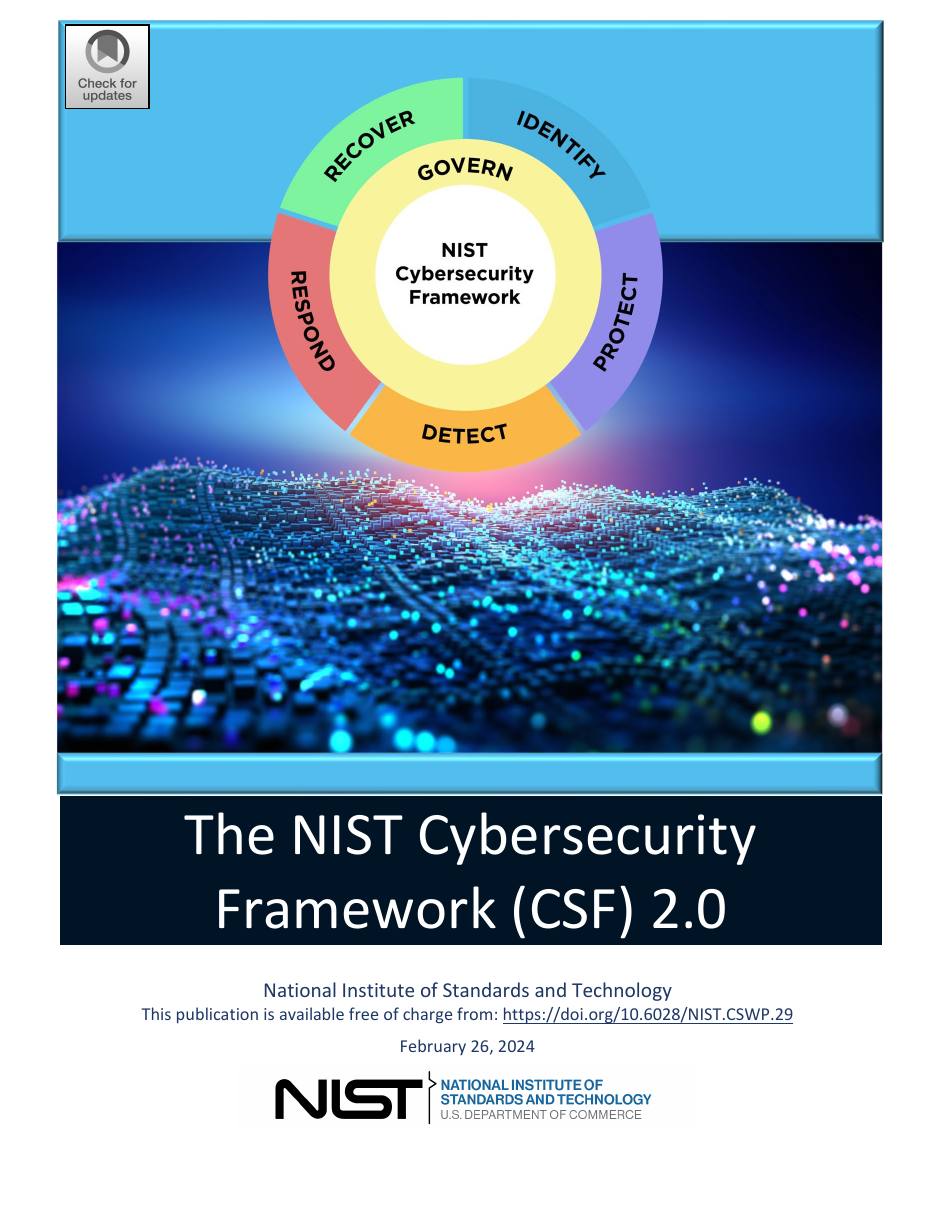
National Institute of Standards and Technology
National Institute of Standards and Technology