
Page 1
Massachusetts Guidance for Artificial Intelligence in K–12 Education
Guidance for Massachusetts district leaders developing or refining local AI policies and implementation practices. Developed by DESE offices and its AI Task Force in partnership with ISTE+ASCD, the document addresses AI fundamentals, ethical principles, phased implementation, equity, legal responsibilities, teaching about and with AI, academic integrity, and district operations. It includes planning tables, reflection questions, action checklists, and supplemental resources. The guidance emphasizes privacy, transparency, bias mitigation, human oversight, and equitable access. It neither recommends nor requires AI adoption; those decisions remain with local leaders.
The first 5 pages, shown as text so search engines and readers can find this document.
Massachusetts Guidance for Artificial Intelligence in K–12 Education
M A S S A C H U S E T T S G U I D A N C E F O R A R T I F I C I A L I N T E L L I G E N C E I N K – 1 2 E D U C AT I O N ACKNOWLEDGEMENTS 2 Welcome and Acknowledgements Massachusetts Guidance for Artificial Intelligence in K-12 Education is designed to support district leaders in creating and refining implementation guidance as well as creating or refining AI-related policies. Grounded in the Commonwealth’s educational vision1, it offers a foundation for developing local guidance and policies while training educators, responsibly integrating AI tools, strengthening AI literacy and building adaptive systems that evolve with emerging technologies. The Massachusetts Department of Elementary and Secondary Education’s Offices of Education Technology (OET) and Digital Literacy and Computer Science as well as our AI Task Force partnered with ISTE+ASCD to develop this guide for district leaders in Massachusetts. We extend our gratitude to the AI Task Force members for bringing their knowledge, perspective, and needs to the development process. DESE TEAM MEMBERS Andréa Coté, CETL, Assistant Director of EdTech Jackie Gantzer, Director of EdTech and School Support Alva Laster, Digital Literacy and Computer Science Program Coordinator Paula Moore, Digital Literacy and Computer Science Content Lead Greg Kulowiec, AI Consultant AI TASK FORCE MEMBERS Kate Carbone, Salem Public Schools Joe Kidd, Norwood Public Schools Chris Parker, Gateway Regional Ruiz Clark, Brookline Public Schools Kate Kinsman, Landmark School Kate Olender, Lenox Public Schools Brad Crozier, Sudbury Public Schools Heather Leonard, Manchester Essex Regional Elena Schuck, Dennis-Yarmouth Regional Rayna Freedman, Mansfield Public Schools Sonia Mitchell, Springfield Public Schools Allen Wang, KIPP Academy Charter School Haruna Hosokawa, Boston Public Schools Jennifer Mullin, Nauset Public Schools We appreciate the valuable feedback provided by additional DESE team members and educators representing organizations from across Massachusetts. Furthermore, we thank Alan Coverstone and Tara Nattrass for leading us through the drafting and development of this resource. Together, we are moving forward to support safe, ethical, and equitable integration of AI in education focused on enhanced educational outcomes and opportunities for all students across Massachusetts. 1 Johnston, R. D. (2024). Overview of DESE’s educational vision & catalog of aligned supports. Retrieved April 9, 2025, from https://www.doe. mass.edu/commissioner/vision/vision-supports.pdf
M A S S A C H U S E T T S G U I D A N C E F O R A R T I F I C I A L I N T E L L I G E N C E I N K – 1 2 E D U C AT I O N CONTENTS 3 Contents Overview Document At A Glance 4 Guidance Foundations Understanding Artificial Intelligence in Education 6 Principles for Ethical AI Use 10 Implementation Using this Document: Organizing for Action 14 Implementation Framework for Schools and Districts 19 AI-Integration Equity and AI: Addressing Harmful Bias and Access 24 Legal Foundations for AI Use 29 AI Literacy: Teaching about AI 35 AI Literacy: Teaching with AI 42 Academic Integrity 49 District Operations 55 Conclusion 61 Supplemental Checklists and Tools Appendix: District AI Integration Potential Actions Checklists 63 Supplemental Resources Citations 73 This document is intended to support districts that choose to explore or implement AI in their schools. The Department is not recommending or requiring the use of AI in schools—those decisions remain with local leaders. Rather, this guidance is designed to help districts that opt to move forward with AI develop thoughtful, responsible, and equitable approaches. Grounded in the Commonwealth’s educational vision, it offers a foundation for local policy development, educator training, AI literacy, and the creation of adaptive systems that evolve alongside emerging technologies.
M A S S A C H U S E T T S G U I D A N C E F O R A R T I F I C I A L I N T E L L I G E N C E I N K – 1 2 E D U C AT I O N DOCUMENT AT A GLANCE 4 Document At A Glance SECTION WHAT’S IN THIS SECTION 1. Understanding Artificial Intelligence in Education Provides definitions of AI types and discusses their relevance in educational settings including current landscape considerations. 2. Principles for Ethical AI Use Introduces five core principles for ethical AI use and offers guidance for applying them in decision- making. 3. Using this Document: Organizing for Action Explains how to use the guidance document effectively, emphasizing alignment with district priorities and long-term change processes. 4. Implementation Framework for Schools and Districts Offers a structured framework to guide phased AI implementation and leadership team formation. 5. Equity and AI: Addressing Harmful Bias and Access Discusses strategies for ensuring equitable access, addressing bias, and promoting inclusivity in AI use. 6. Legal Foundations for AI Use Highlights key legal considerations for AI implementation, including privacy, accessibility, and compliance with state and federal laws. 7. AI Literacy: Teaching ABOUT AI Outlines competencies for understanding and critically engaging with AI across all educational roles. 8. AI Literacy: Teaching WITH AI Provides strategies for using AI tools in teaching and learning to enhance engagement and creativity. 9. Academic Integrity Focuses on maintaining integrity in academic work including considerations around authorship, citation, and ethical AI use. 10. District Operations Addresses the integration of AI into district operations such as budgeting, staffing, and resource management.
SECTION M A S S A C H U S E T T S G U I D A N C E F O R A R T I F I C I A L I N T E L L I G E N C E I N K – 1 2 E D U C AT I O N Understanding Artificial Intelligence in Education
Doxxly editorial guide
This guide helps you understand the scope of Massachusetts Guidance for Artificial Intelligence in K - 12 Education before or alongside reading the original document. It is based on the catalogue record, credited creator, source, classification and topics shown on this page. It does not replace the original work and does not invent claims about passages that Doxxly cannot verify.
Massachusetts Guidance for Artificial Intelligence in K - 12 Education is a 74-page documentcredited to Hana W. Northcote. Guidance for Massachusetts district leaders developing or refining local AI policies and implementation practices. Developed by DESE offices and its AI Task Force in partnership with ISTE+ASCD, the document addresses AI fundamentals, ethical principles, phased implementation, equity, legal responsibilities, teaching about and with AI, academic integrity, and district operations. It includes planning tables, reflection questions, action checklists, and supplemental resources. The guidance emphasizes privacy, transparency, bias mitigation, human oversight, and equitable access. It neither recommends nor requires AI adoption; those decisions remain with local leaders. It appears in the Technology & Security collection, which groups it with other material that readers may use for comparison and further study.
The item can be approached in several ways. A reader looking for a quick orientation can begin with the free five-page preview, inspect the page structure and use the metadata to judge relevance. Someone undertaking deeper research can work through the complete file, search its indexed text, record useful page references and compare its treatment of Massachusetts, K - 12 education, Artificial intelligence, District leadership, AI policy, AI literacy, Ethical AI, Educational equity, Student data privacy, Academic integrity, District operations with the related resources linked below.
Rather than reducing the work to a single claim, this page treats it as a source that should be read in context. The title, creator, publication source, licence and format all help explain what kind of evidence it may offer. Readers should distinguish the original author's statements from Doxxly's catalogue description, and should cite the original edition when using the material in academic, professional or published work.
The catalogue connects this document with Massachusetts, K - 12 education, Artificial intelligence, District leadership, AI policy, AI literacy, Ethical AI, Educational equity, Student data privacy, Academic integrity, District operations. These terms offer practical entry points rather than a substitute for close reading. Start by identifying the definitions, examples, arguments, tables or visual explanations attached to each topic. Then note where the creator draws connections, makes distinctions or moves from background material to a conclusion, recommendation, calculation or narrative development.
A useful reading method is to separate description from interpretation. First record what the item actually presents: names, headings, figures, formulas, quotations or stated propositions. Next consider why those details matter within the whole work. Finally compare them with another source from the same subject area. This process helps turn a long digital file into evidence that can be evaluated rather than merely skimmed.
The following is an editorial content guide based on the verified catalogue topics. It is not represented as the original author's formal table of contents. Use it to organise notes while moving through the 74 pages in the player.
Use this section of the reading guide to identify how Massachusetts appears in Massachusetts Guidance for Artificial Intelligence in K - 12 Education, note important terms, and connect the subject to the wider purpose of the work.
Use this section of the reading guide to identify how K - 12 education appears in Massachusetts Guidance for Artificial Intelligence in K - 12 Education, note important terms, and connect the subject to the wider purpose of the work.
Use this section of the reading guide to identify how Artificial intelligence appears in Massachusetts Guidance for Artificial Intelligence in K - 12 Education, note important terms, and connect the subject to the wider purpose of the work.
Use this section of the reading guide to identify how District leadership appears in Massachusetts Guidance for Artificial Intelligence in K - 12 Education, note important terms, and connect the subject to the wider purpose of the work.
Use this section of the reading guide to identify how AI policy appears in Massachusetts Guidance for Artificial Intelligence in K - 12 Education, note important terms, and connect the subject to the wider purpose of the work.
Use this section of the reading guide to identify how AI literacy appears in Massachusetts Guidance for Artificial Intelligence in K - 12 Education, note important terms, and connect the subject to the wider purpose of the work.
Use this section of the reading guide to identify how Ethical AI appears in Massachusetts Guidance for Artificial Intelligence in K - 12 Education, note important terms, and connect the subject to the wider purpose of the work.
Use this section of the reading guide to identify how Educational equity appears in Massachusetts Guidance for Artificial Intelligence in K - 12 Education, note important terms, and connect the subject to the wider purpose of the work.
When a heading in the original differs from this guide, follow the original heading in your citation. Page numbers can also vary between editions. Doxxly's direct page field is useful for navigation, but formal references should include the title, creator, source and edition details available in the file itself.
Doxxly credits Hana W. Northcote as the author or creator of Massachusetts Guidance for Artificial Intelligence in K - 12 Education. This page does not add an unverified biography, job title or institutional affiliation. The attribution is preserved so readers can distinguish the creator from the hosting library and follow the original record when an external author link is available.
Author context matters because a work reflects a particular purpose, audience and point of view. Before relying on the material, consider what the creator set out to explain, when the source was produced and whether later research or revised guidance should also be consulted. For literature and philosophy, compare translations and editions; for technical material, check whether a newer version has superseded the one shown here.
The recorded source for this item is doe.mass.edu. Doxxly provides access and discovery tools but does not claim to be the original publisher unless explicitly stated. Source links, creator attribution and the recorded Publicly available file collected for editorial review licence are displayed to help readers assess provenance and permitted use.
Provenance is especially important for reports, standards, presentations and working spreadsheets. Check the original source for amendments, supporting files and current policy. A trustworthy research workflow keeps the source URL with any notes or downloaded copy, verifies important figures against the original, and avoids treating an archived document as automatically current.
Visit doe.mass.eduBegin with the title and opening pages, then use the guide above to decide whether to read sequentially or move to a particular topic. The Doxxly player provides previous and next navigation, a direct page field, zoom steps, fit-to-width and fit-to-page modes, rotation and fullscreen. These controls are useful when a page contains small type, a wide table, an image, a scanned layout or a dense sequence of notes.
The first five pages are open to every visitor. A plan unlocks the complete item and full-document search. Search is best used for distinctive names, technical terms or short phrases; broad words can produce too many possible contexts. When you find a useful passage, read the surrounding pages so that a sentence, chart or formula is not separated from its explanation.
If downloading is enabled, members can obtain the original PDF file. Keep the original format when formulas, slide sequencing, pagination or layout carries meaning. Respect the Publicly available file collected for editorial review terms displayed on this page, and use the rights-report link if you believe the attribution or availability needs review.
As you read Massachusetts Guidance for Artificial Intelligence in K - 12 Education, ask which audience the creator addresses, what problem or idea organises the work, what evidence is presented, and which assumptions remain unstated. Note whether important terms are defined consistently and whether examples represent a broader pattern or a narrow case. For quantitative material, record units, time periods, formulas and data sources. For interpretive material, separate the creator's language from your own summary.
A second set of questions concerns relevance today. Which parts remain durable, which depend on their historical or institutional setting, and what would need confirmation from a newer source? Following the tags and the Technology & Security collection can reveal useful comparisons. Agreement between sources can strengthen confidence, while disagreement can point to changing definitions, methods, evidence or priorities.
Finally, decide what you need from the item: background knowledge, a quotation, a worked example, a model, a visual explanation or a starting bibliography. That purpose should guide the depth of reading and the notes you keep. Doxxly helps locate and navigate the source; careful interpretation remains the reader's responsibility.
Practical answers about reading, downloading and understanding this document on Doxxly.
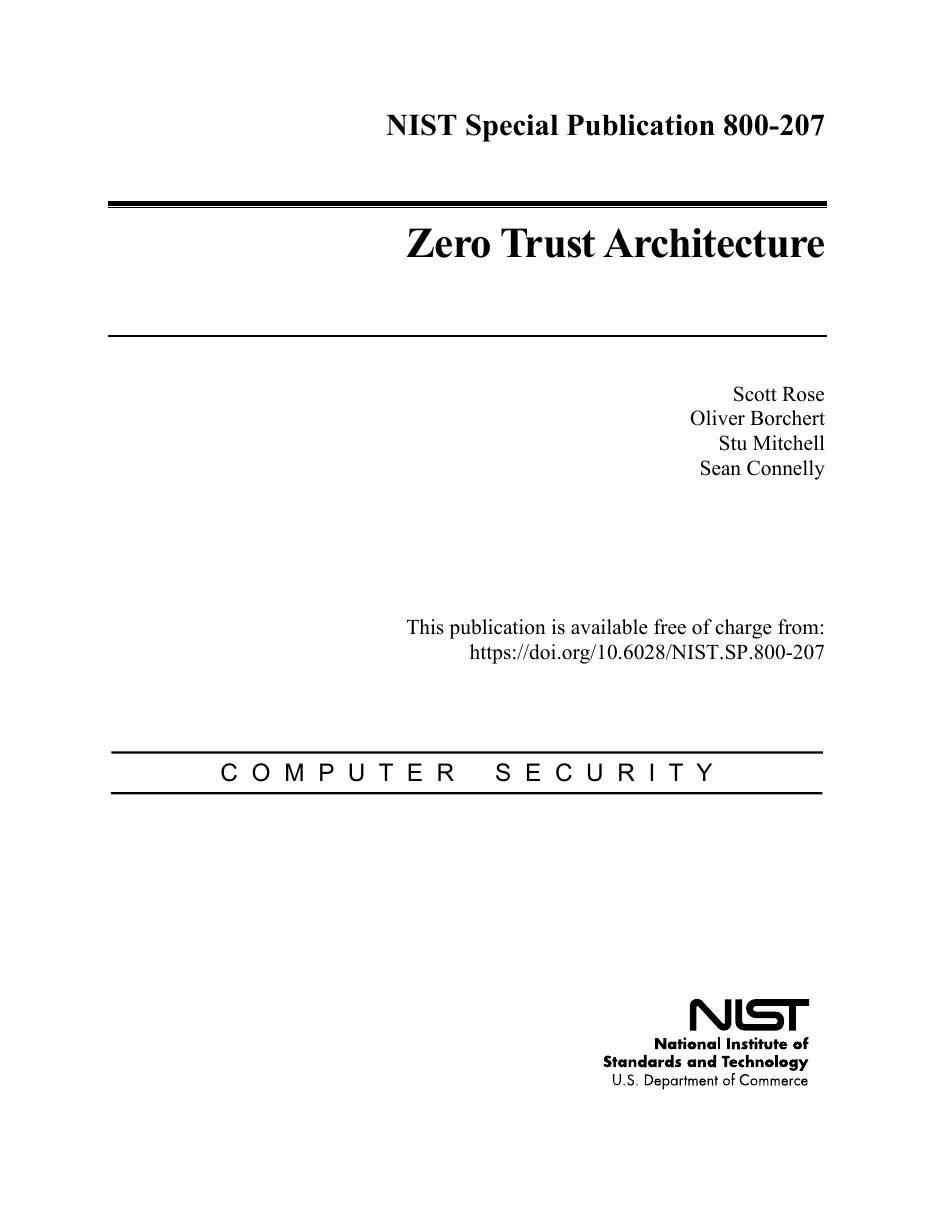
National Institute of Standards and Technology
National Institute of Standards and Technology
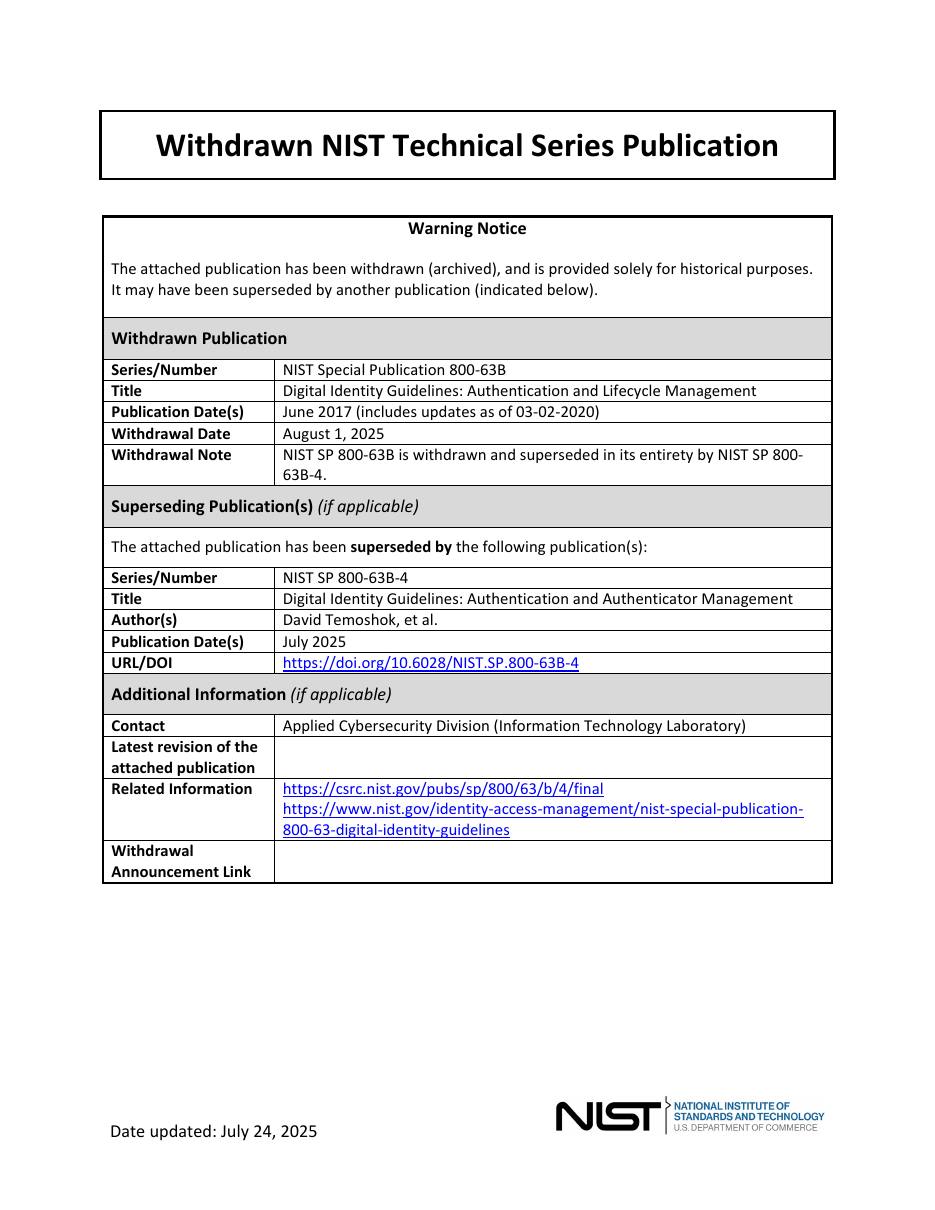
National Institute of Standards and Technology
National Institute of Standards and Technology
National Institute of Standards and Technology
National Institute of Standards and Technology