
Page 1
Payment Card Industry (PCI) Data Security Standard Self-Assessment Questionnaire A-EP and Attestation of Compliance Partially Outsourced E-commerce Merchants Using a Third-Party Website for Payment Processing Version 3.0 February 2014
Version 3.0, dated February 2014, of the PCI DSS Self-Assessment Questionnaire A-EP and Attestation of Compliance. Intended for eligible e-commerce merchants that partially outsource payment processing and whose websites affect payment security without receiving cardholder data. Includes eligibility criteria, completion guidance, merchant assessment information, applicable questions across the 12 PCI DSS requirement areas, expected testing activities, compensating controls and non-applicability worksheets, compliance attestations, and an action plan for non-compliant requirements.
The first 5 pages, shown as text so search engines and readers can find this document.
Payment Card Industry (PCI) Data Security Standard Self-Assessment Questionnaire A-EP and Attestation of Compliance Partially Outsourced E-commerce Merchants Using a Third-Party Website for Payment Processing Version 3.0 February 2014
PCI DSS SAQ A-EP, v3.0 February 2014 © 2006-2014 PCI Security Standards Council, LLC. All Rights Reserved. Page i Document Changes Date Version Description N/A 1.0 Not used. N/A 2.0 Not used. February 2014 3.0 New SAQ to address requirements applicable to e-commerce merchants with a websites that do not themselves receive cardholder data but which do affect the security of the payment transaction and/or the integrity of the page that accepts the consumer’s cardholder data. Content aligns with PCI DSS v3.0 requirements and testing procedures.
PCI DSS SAQ A-EP, v3.0 February 2014 © 2006-2014 PCI Security Standards Council, LLC. All Rights Reserved. Page ii Table of Contents Document Changes .................................................................................................................. i Before You Begin .....................................................................................................................iii PCI DSS Self-Assessment Completion Steps ...................................................................................... iv Understanding the Self-Assessment Questionnaire ........................................................................... iv Expected Testing ................................................................................................................................... iv Completing the Self-Assessment Questionnaire .................................................................................. v Guidance for Non-Applicability of Certain, Specific Requirements .................................................... v Legal Exception .................................................................................................................................... v Section 1: Assessment Information ..................................................................................... 1 Section 2: Self-Assessment Questionnaire A-EP ................................................................ 4 Build and Maintain a Secure Network .................................................................................................... 4 Requirement 1: Install and maintain a firewall configuration to protect data ........................................ 4 Requirement 2: Do not use vendor-supplied defaults for system passwords and other security parameters .................................................................................................................. 7 Protect Cardholder Data ........................................................................................................................ 11 Requirement 3: Protect stored cardholder data.................................................................................. 11 Requirement 4: Encrypt transmission of cardholder data across open, public networks ................... 12 Maintain a Vulnerability Management Program .................................................................................. 13 Requirement 5: Protect all systems against malware and regularly update anti-virus software or programs ................................................................................................................... 13 Requirement 6: Develop and maintain secure systems and applications .......................................... 15 Implement Strong Access Control Measures ...................................................................................... 19 Requirement 7: Restrict access to cardholder data by business need to know ................................. 19 Requirement 8: Identify and authenticate access to system components ......................................... 20 Requirement 9: Restrict physical access to cardholder data ............................................................. 23 Regularly Monitor and Test Networks .................................................................................................. 25 Requirement 10: Track and monitor all access to network resources and cardholder data ................ 25 Requirement 11: Regularly test security systems and processes ........................................................ 28 Maintain an Information Security Policy .............................................................................................. 32 Requirement 12: Maintain a policy that addresses information security for all personnel ................... 32 Appendix A: Additional PCI DSS Requirements for Shared Hosting Providers..................... 35 Appendix B: Compensating Controls Worksheet ...................................................................... 36 Appendix C: Explanation of Non-Applicability........................................................................... 37 Section 3: Validation and Attestation Details .....................................................................38
PCI DSS SAQ A-EP, v3.0 February 2014 © 2006-2014 PCI Security Standards Council, LLC. All Rights Reserved. Page iii Before You Begin SAQ A-EP has been developed to address requirements applicable to e-commerce merchants with a website(s) that does not itself receive cardholder data but which does affect the security of the payment transaction and/or the integrity of the page that accepts the consumer’s cardholder data. SAQ A-EP merchants are e-commerce merchants who partially outsource their e-commerce payment channel to PCI DSS validated third parties and do not electronically store, process, or transmit any cardholder data on their systems or premises. SAQ A-EP merchants confirm that, for this payment channel: Your company accepts only e-commerce transactions; All processing of cardholder data is outsourced to a PCI DSS validated third-party payment processor; Your e-commerce website does not receive cardholder data but controls how consumers, or their cardholder data, are redirected to a PCI DSS validated third-party payment processor; Your e-commerce website is not connected to any other systems within your environment (this can be achieved via network segmentation to isolate the website from all other systems); If merchant website is hosted by a third-party provider, the provider is validated to all applicable PCI DSS requirements (e.g., including PCI DSS Appendix A if the provider is a shared hosting provider); All elements of payment pages that are delivered to the consumer’s browser originate from either the merchant’s website or a PCI DSS compliant service provider(s); Your company does not electronically store, process, or transmit any cardholder data on your systems or premises, but relies entirely on a third party(s) to handle all these functions; Your company has confirmed that all third party(s) handling storage, processing, and/or transmission of cardholder data are PCI DSS compliant; and Your company retains only paper reports or receipts with cardholder data, and these documents are not received electronically. This SAQ is applicable only to e-commerce channels. This shortened version of the SAQ includes questions that apply to a specific type of small merchant environment, as defined in the above eligibility criteria. If there are PCI DSS requirements applicable to your environment that are not covered in this SAQ, it may be an indication that this SAQ is not suitable for your environment. Additionally, you must still comply with all applicable PCI DSS requirements in order to be PCI DSS compliant.
PCI DSS SAQ A-EP, v3.0 February 2014 © 2006-2014 PCI Security Standards Council, LLC. All Rights Reserved. Page iv PCI DSS Self-Assessment Completion Steps 1. Identify the applicable SAQ for your environment – refer to the Self-Assessment Questionnaire Instructions and Guidelines document on PCI SSC website for information. 2. Confirm that your environment is properly scoped and meets the eligibility criteria for the SAQ you are using (as defined in Part 2g of the Attestation of Compliance). 3. Assess your environment for compliance with applicable PCI DSS requirements. 4. Complete all sections of this document: Section 1 (Part 1 & 2 of the AOC) – Assessment Information and Executive Summary. Section 2 – PCI DSS Self-Assessment Questionnaire (SAQ A-EP) Section 3 (Parts 3 & 4 of the AOC) – Validation and Attestation Details and Action Plan for Non-Compliant Requirements (if applicable) 5. Submit the SAQ and Attestation of Compliance, along with any other requested documentation— such as ASV scan reports—to your acquirer, payment brand or other requester. Understanding the Self-Assessment Questionnaire The questions contained in the “PCI DSS Question” column in this self-assessment questionnaire are based on the requirements in the PCI DSS. Additional resources that provide guidance on PCI DSS requirements and how to complete the self- assessment questionnaire have been provided to assist with the assessment process. An overview of some of these resources is provided below: Document Includes: PCI DSS (PCI Data Security Standard Requirements and Security Assessment Procedures) Guidance on Scoping Guidance on the intent of all PCI DSS Requirements Details of testing procedures Guidance on Compensating Controls SAQ Instructions and Guidelines documents Information about all SAQs and their eligibility criteria How to determine which SAQ is right for your organization PCI DSS and PA-DSS Glossary of Terms, Abbreviations, and Acronyms Descriptions and definitions of terms used in the PCI DSS and self-assessment questionnaires These and other resources can be found on the PCI SSC website (www.pcisecuritystandards.org). Organizations are encouraged to review the PCI DSS and other supporting documents before beginning an assessment. Expected Testing The instructions provided in the “Expected Testing” column are based on the testing procedures in the PCI DSS, and provide a high-level description of the types of testing activities that should be performed in order to verify that a requirement has been met. Full details of testing procedures for each requirement can be found in the PCI DSS.
Doxxly editorial guide
This guide helps you understand the scope of Payment Card Industry (PCI) Data Security Standard: Self-Assessment Questionnaire A-EP and Attestation of Compliance - Partially Outsourced E-commerce Merchants Using a Third-Party Website for Payment Processing, Version 3.0 before or alongside reading the original document. It is based on the catalogue record, credited creator, source, classification and topics shown on this page. It does not replace the original work and does not invent claims about passages that Doxxly cannot verify.
Payment Card Industry (PCI) Data Security Standard: Self-Assessment Questionnaire A-EP and Attestation of Compliance - Partially Outsourced E-commerce Merchants Using a Third-Party Website for Payment Processing, Version 3.0 is a 46-page documentcredited to Rhea H. Underhill. Version 3.0, dated February 2014, of the PCI DSS Self-Assessment Questionnaire A-EP and Attestation of Compliance. Intended for eligible e-commerce merchants that partially outsource payment processing and whose websites affect payment security without receiving cardholder data. Includes eligibility criteria, completion guidance, merchant assessment information, applicable questions across the 12 PCI DSS requirement areas, expected testing activities, compensating controls and non-applicability worksheets, compliance attestations, and an action plan for non-compliant requirements. It appears in the Technology & Security collection, which groups it with other material that readers may use for comparison and further study.
The item can be approached in several ways. A reader looking for a quick orientation can begin with the free five-page preview, inspect the page structure and use the metadata to judge relevance. Someone undertaking deeper research can work through the complete file, search its indexed text, record useful page references and compare its treatment of PCI DSS, SAQ A-EP, Version 3.0, E-commerce, Payment security, Self-assessment, Attestation of Compliance, Third-party payment processing, Cardholder data protection with the related resources linked below.
Rather than reducing the work to a single claim, this page treats it as a source that should be read in context. The title, creator, publication source, licence and format all help explain what kind of evidence it may offer. Readers should distinguish the original author's statements from Doxxly's catalogue description, and should cite the original edition when using the material in academic, professional or published work.
The catalogue connects this document with PCI DSS, SAQ A-EP, Version 3.0, E-commerce, Payment security, Self-assessment, Attestation of Compliance, Third-party payment processing, Cardholder data protection. These terms offer practical entry points rather than a substitute for close reading. Start by identifying the definitions, examples, arguments, tables or visual explanations attached to each topic. Then note where the creator draws connections, makes distinctions or moves from background material to a conclusion, recommendation, calculation or narrative development.
A useful reading method is to separate description from interpretation. First record what the item actually presents: names, headings, figures, formulas, quotations or stated propositions. Next consider why those details matter within the whole work. Finally compare them with another source from the same subject area. This process helps turn a long digital file into evidence that can be evaluated rather than merely skimmed.
The following is an editorial content guide based on the verified catalogue topics. It is not represented as the original author's formal table of contents. Use it to organise notes while moving through the 46 pages in the player.
Use this section of the reading guide to identify how PCI DSS appears in Payment Card Industry (PCI) Data Security Standard: Self-Assessment Questionnaire A-EP and Attestation of Compliance - Partially Outsourced E-commerce Merchants Using a Third-Party Website for Payment Processing, Version 3.0, note important terms, and connect the subject to the wider purpose of the work.
Use this section of the reading guide to identify how SAQ A-EP appears in Payment Card Industry (PCI) Data Security Standard: Self-Assessment Questionnaire A-EP and Attestation of Compliance - Partially Outsourced E-commerce Merchants Using a Third-Party Website for Payment Processing, Version 3.0, note important terms, and connect the subject to the wider purpose of the work.
Use this section of the reading guide to identify how Version 3.0 appears in Payment Card Industry (PCI) Data Security Standard: Self-Assessment Questionnaire A-EP and Attestation of Compliance - Partially Outsourced E-commerce Merchants Using a Third-Party Website for Payment Processing, Version 3.0, note important terms, and connect the subject to the wider purpose of the work.
Use this section of the reading guide to identify how E-commerce appears in Payment Card Industry (PCI) Data Security Standard: Self-Assessment Questionnaire A-EP and Attestation of Compliance - Partially Outsourced E-commerce Merchants Using a Third-Party Website for Payment Processing, Version 3.0, note important terms, and connect the subject to the wider purpose of the work.
Use this section of the reading guide to identify how Payment security appears in Payment Card Industry (PCI) Data Security Standard: Self-Assessment Questionnaire A-EP and Attestation of Compliance - Partially Outsourced E-commerce Merchants Using a Third-Party Website for Payment Processing, Version 3.0, note important terms, and connect the subject to the wider purpose of the work.
Use this section of the reading guide to identify how Self-assessment appears in Payment Card Industry (PCI) Data Security Standard: Self-Assessment Questionnaire A-EP and Attestation of Compliance - Partially Outsourced E-commerce Merchants Using a Third-Party Website for Payment Processing, Version 3.0, note important terms, and connect the subject to the wider purpose of the work.
Use this section of the reading guide to identify how Attestation of Compliance appears in Payment Card Industry (PCI) Data Security Standard: Self-Assessment Questionnaire A-EP and Attestation of Compliance - Partially Outsourced E-commerce Merchants Using a Third-Party Website for Payment Processing, Version 3.0, note important terms, and connect the subject to the wider purpose of the work.
Use this section of the reading guide to identify how Third-party payment processing appears in Payment Card Industry (PCI) Data Security Standard: Self-Assessment Questionnaire A-EP and Attestation of Compliance - Partially Outsourced E-commerce Merchants Using a Third-Party Website for Payment Processing, Version 3.0, note important terms, and connect the subject to the wider purpose of the work.
When a heading in the original differs from this guide, follow the original heading in your citation. Page numbers can also vary between editions. Doxxly's direct page field is useful for navigation, but formal references should include the title, creator, source and edition details available in the file itself.
Doxxly credits Rhea H. Underhill as the author or creator of Payment Card Industry (PCI) Data Security Standard: Self-Assessment Questionnaire A-EP and Attestation of Compliance - Partially Outsourced E-commerce Merchants Using a Third-Party Website for Payment Processing, Version 3.0. This page does not add an unverified biography, job title or institutional affiliation. The attribution is preserved so readers can distinguish the creator from the hosting library and follow the original record when an external author link is available.
Author context matters because a work reflects a particular purpose, audience and point of view. Before relying on the material, consider what the creator set out to explain, when the source was produced and whether later research or revised guidance should also be consulted. For literature and philosophy, compare translations and editions; for technical material, check whether a newer version has superseded the one shown here.
The recorded source for this item is pcisecuritystandards.org. Doxxly provides access and discovery tools but does not claim to be the original publisher unless explicitly stated. Source links, creator attribution and the recorded Publicly available file collected for editorial review licence are displayed to help readers assess provenance and permitted use.
Provenance is especially important for reports, standards, presentations and working spreadsheets. Check the original source for amendments, supporting files and current policy. A trustworthy research workflow keeps the source URL with any notes or downloaded copy, verifies important figures against the original, and avoids treating an archived document as automatically current.
Visit pcisecuritystandards.orgBegin with the title and opening pages, then use the guide above to decide whether to read sequentially or move to a particular topic. The Doxxly player provides previous and next navigation, a direct page field, zoom steps, fit-to-width and fit-to-page modes, rotation and fullscreen. These controls are useful when a page contains small type, a wide table, an image, a scanned layout or a dense sequence of notes.
The first five pages are open to every visitor. A plan unlocks the complete item and full-document search. Search is best used for distinctive names, technical terms or short phrases; broad words can produce too many possible contexts. When you find a useful passage, read the surrounding pages so that a sentence, chart or formula is not separated from its explanation.
If downloading is enabled, members can obtain the original PDF file. Keep the original format when formulas, slide sequencing, pagination or layout carries meaning. Respect the Publicly available file collected for editorial review terms displayed on this page, and use the rights-report link if you believe the attribution or availability needs review.
As you read Payment Card Industry (PCI) Data Security Standard: Self-Assessment Questionnaire A-EP and Attestation of Compliance - Partially Outsourced E-commerce Merchants Using a Third-Party Website for Payment Processing, Version 3.0, ask which audience the creator addresses, what problem or idea organises the work, what evidence is presented, and which assumptions remain unstated. Note whether important terms are defined consistently and whether examples represent a broader pattern or a narrow case. For quantitative material, record units, time periods, formulas and data sources. For interpretive material, separate the creator's language from your own summary.
A second set of questions concerns relevance today. Which parts remain durable, which depend on their historical or institutional setting, and what would need confirmation from a newer source? Following the tags and the Technology & Security collection can reveal useful comparisons. Agreement between sources can strengthen confidence, while disagreement can point to changing definitions, methods, evidence or priorities.
Finally, decide what you need from the item: background knowledge, a quotation, a worked example, a model, a visual explanation or a starting bibliography. That purpose should guide the depth of reading and the notes you keep. Doxxly helps locate and navigate the source; careful interpretation remains the reader's responsibility.
Practical answers about reading, downloading and understanding this document on Doxxly.
National Institute of Standards and Technology

National Institute of Standards and Technology
National Institute of Standards and Technology
National Institute of Standards and Technology
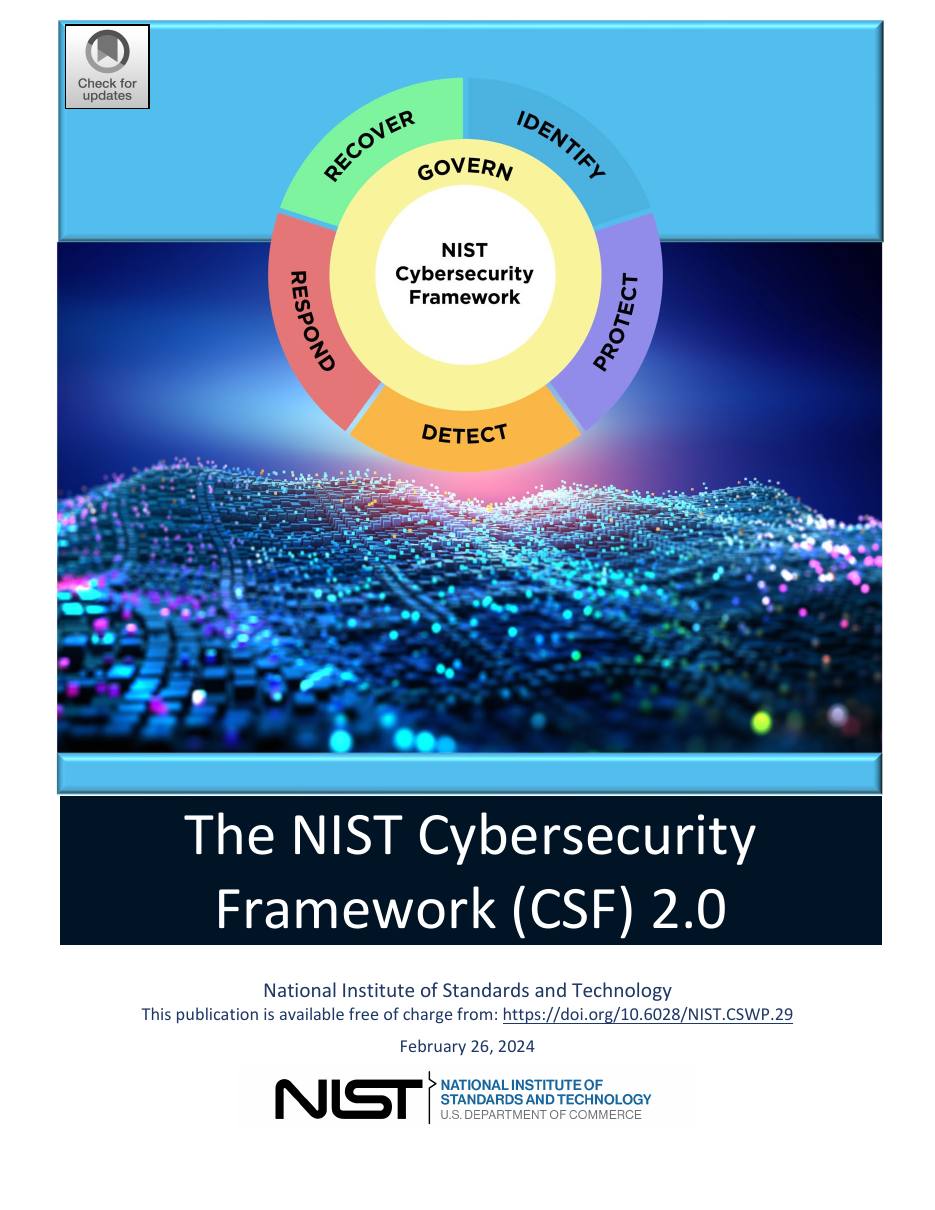
National Institute of Standards and Technology
National Institute of Standards and Technology